Perplexity for recruiting research
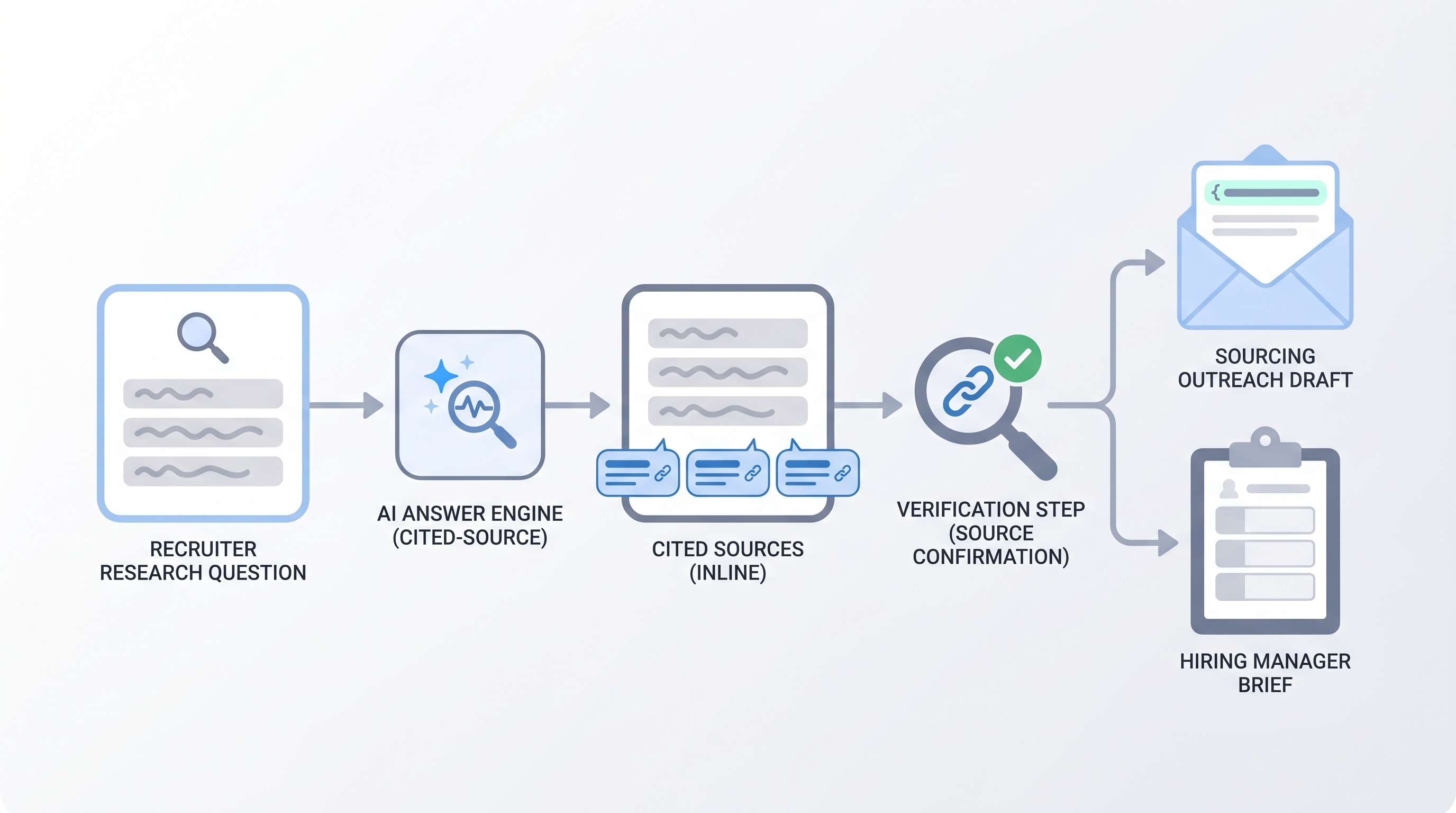
Using Perplexity AI as a cited-source answer engine for recruiting research tasks: company and industry background before outreach, compensation benchmarking, technical role understanding, and labor market intelligence, with every answer linked to verifiable sources rather than drawn from a static training corpus.
Michal Juhas · Last reviewed May 5, 2026
What is Perplexity for recruiting research?
Perplexity is an AI-powered answer engine that searches the live web before generating each response and cites its sources inline. For recruiting and talent acquisition, it fills a specific gap: getting current, sourced information about companies, industries, compensation ranges, and technical roles before a sourcer writes outreach or a recruiter briefs a hiring manager.
The distinction from standard chat tools matters in practice. When you ask Perplexity whether a target company recently cut headcount or opened a new engineering hub, it retrieves and links current pages. When you ask the same question to a tool without live web access, you may get a confident answer based on information that is one to two years old. The citation trail is the starting point for verification, not a replacement for it.
In practice
- A sourcer about to send outreach to engineers at a Series B fintech searches the company name in Perplexity, finds a cited article about a new payments product launch from three weeks ago, and adds one specific line to the message hook. Response rates on research-backed messages are consistently higher than on generic company-copy messages.
- A TA lead preparing a job description for a Principal Data Scientist role asks Perplexity what that title owns at a company of similar scale and product type. The answer, with citations to engineering blogs and job postings, gives the recruiter enough vocabulary to write a credible brief before the intake call.
- In a debrief, a recruiter says "Perplexity flagged the layoff" meaning they ran a quick search before outreach and the tool surfaced a news article about a recent reduction in force at the target company, which saved them from sending an ill-timed message.
Quick read, then how hiring teams use it
This is for recruiters, sourcers, TA, and HR partners who need the same vocabulary in debriefs, vendor calls, and policy reviews. Skim the first section when you need a fast shared picture. Use the second when you are deciding how Perplexity fits your research workflow, your outreach process, or your intake prep.
Plain-language summary
- What it means for you: Perplexity answers recruiting research questions using today's web and shows you which pages it read. That is more useful than asking a chat tool a market question and getting an answer based on data from a year or two ago.
- How you would use it: Before writing outreach or briefing a hiring manager, run a few searches on the target company, role type, or market. Read the cited sources on any fact that matters before you repeat it.
- How to get started: Pick one part of your week where you spend time looking up company background or role context manually. Replace those lookups with Perplexity searches for two weeks and see where it saves time versus where you still need to go to the primary source directly.
- When it is a good time: Before outreach drafting, before intake calls on unfamiliar technical roles, and before briefing a hiring manager on compensation context. Not as a substitute for professional salary survey data or legal compliance research.
When you are running live reqs and tools
- What it means for you: Perplexity is a research layer that sits before the sourcing and drafting tools in your workflow. It informs the Boolean strings you build, the outreach hooks you write, and the role context you share with hiring managers, all in less time than a manual web research session.
- When it is a good time: When the role is in an industry or function you are less familiar with. When the target company is growing quickly and LinkedIn data may lag behind reality. When you need a quick compensation anchor before a conversation with a hiring manager who has not done a market review recently.
- How to use it: Search the company plus a signal word for outreach prep. Search the role title plus company size or industry for role translation. Search the job title plus city or region for compensation context. Click at least one cited source on any fact you plan to use. Log the search date so you know how fresh the information is when you reference it weeks later.
- How to get started: Add a Perplexity search step to your outreach prep routine for the next ten reqs, right before you open a LinkedIn InMail draft. Compare the output quality and relevance of messages written with and without that step. Most sourcers in cohort sessions report the research step costs two to three minutes and lifts message quality meaningfully, especially on passive outreach to senior candidates who can tell when a message is generic.
- What to watch for: Cited sources that are older than six months on fast-moving topics like headcount, product lines, or leadership. Perplexity summaries that misread or paraphrase the source article. Compensation figures from job postings rather than structured survey data. And the temptation to paste a Perplexity summary directly into a brief without reading the underlying sources.
Where we talk about this
On AI with Michal live sessions, Perplexity comes up as a research companion in the sourcing and outreach modules, particularly in the AI in recruiting track where we compare tools for different parts of the workflow. The emphasis is on what the citation trail enables, not just the speed: you get a verifiable starting point for research instead of an unverifiable answer. If you want the full conversation with a practitioner cohort, start at Sourcing Lab and bring a real req you are about to source so the research drills are grounded in something live.
Around the web (opinions and rabbit holes)
Third-party creators move fast on this topic. Treat these as starting points, not endorsements, and double-check anything before you add it to a sourcing or outreach workflow.
YouTube
- Recent walkthroughs for "Perplexity AI for research" (open results on YouTube, then filter by recent uploads). The product ships changes frequently, so recent videos outperform older ones significantly.
- Side-by-side workflow comparisons (Perplexity, ChatGPT, Google) on YouTube tend to be more useful than general Perplexity demos for understanding the recruiting-relevant trade-offs.
- r/recruiting and r/sourcing threads on AI research tools surface honest practitioner takes on what saves time versus what adds steps without payoff.
- The Perplexity subreddit (r/perplexity_ai) has power-user threads on prompting patterns and which search modes work better for factual versus synthesis tasks.
Quora
- Searches for "Perplexity AI recruiting" and "AI for company research sourcing" on Quora return practitioner-written answers with specific use cases, though answer quality varies and dates matter for a fast-moving tool.
Perplexity versus other AI research tools
| Research task | Perplexity | ChatGPT (no browsing) | LinkedIn Recruiter |
|---|---|---|---|
| Recent company news | Strong (live web, cited) | Weak (training cutoff) | Limited |
| Role vocabulary for JDs | Good | Good | Limited |
| Compensation context | Moderate (public data only) | Outdated | Limited |
| Candidate profile search | Weak | Not applicable | Strong |
| Industry landscape | Good | Moderate | Limited |
Related on this site
- Glossary: AI for recruiters, ChatGPT for recruiters, LinkedIn Recruiter AI features, Hallucination, AI outreach drafting
- Blog: AI sourcing tools for recruiters
- Live cohort: Sourcing Lab
- Membership: Become a member
- Self-paced: Starting with AI: foundations in recruiting