Proprietary talent pool
A recruiter- or company-owned list of people you have met, vetted, or enriched with first-party context so you are less dependent on re-buying the same public profiles on large marketplaces every search.
Michal Juhas · Last reviewed May 2, 2026
What is a proprietary talent pool?
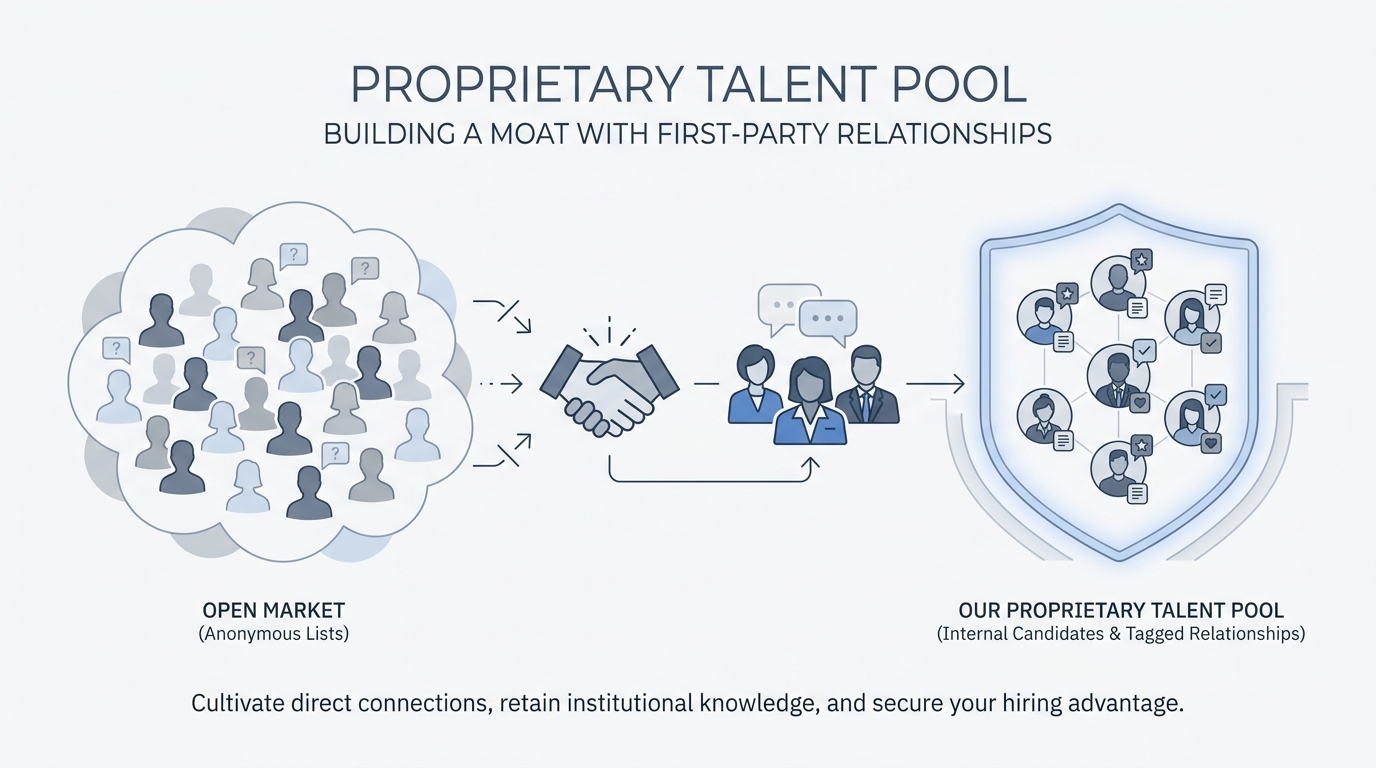
A proprietary talent pool is your organization's own list of people you have met or sourced, with notes on why they matter, instead of only buying ads on the open market. It is useful only when data quality and consent stay high.
In practice
- Your CRM has a tag like "met at Berlin meetup 2025" next to engineers you might call later; that private list is closer to a proprietary pool than a cold bought list. Leaders say "we should mine our own pool" in pipeline reviews.
- Internal mobility talks about a "silver medalist pool" after a big hiring sprint, meaning people you almost hired who agreed to stay warm.
- Agencies pitch "our curated bench" which is the same idea with marketing polish on the slide deck.
Quick read, then how hiring teams use it
This is for recruiters, sourcers, TA, and HR partners who need the same vocabulary in debriefs, vendor calls, and policy reviews. Skim the first section when you need a fast shared picture. Use the second when you are deciding how it shows up in the ATS, sourcing tools, or candidate communications.
Plain-language summary
- What it means for you: It is your own list of people you already talked to, with notes, so you are not re-buying the same search every quarter.
- How you would use it: You tag who said "not now," who referred a friend, and who interviewed last year.
- How to get started: Export one reqs worth of silver medalists into a spreadsheet with consent notes, then decide what belongs in the ATS instead.
- When it is a good time: When hiring managers ask "who do we already know" and the answer cannot live in one recruiter's inbox.
When you are running live reqs and tools
- What it means for you: A proprietary pool is consent, freshness, and searchability: CRM fields, nurture rules, and GDPR retention tied to your enrichment vendors.
- When it is a good time: When semantic search across your CRM beats buying the same profiles again from a marketplace.
- How to use it: Define ownership, audit duplicates, and connect pools to real reqs with timelines, not vague "talent communities."
- How to get started: Read ATS plus CRM threads on r/recruiting, pick one field standard, and migrate.
- What to watch for: Stale contacts mailed as if they applied yesterday, and pools that are really just scraped spreadsheets.
Where we talk about this
Sourcing automation blocks ask how pools sync between ATS, CRM, and outreach tools without leaking keys. AI in recruiting blocks ask how assistants query pools without inventing history. Bring messy field names to Sourcing Lab.
Around the web (opinions and rabbit holes)
Third-party creators move fast. Treat these as starting points, not endorsements, and double-check anything before you wire candidate data.
YouTube
- How to Use LinkedIn Recruiter (LinkedIn) is about lists and filters many teams confuse with a "pool."
- Introduction to Large Language Models (Google Cloud Tech) helps when vendors promise "AI talent rediscovery."
- The AI Adoption Curve Explained (IBM Technology) helps finance conversations about CRM investment.
- Building and maintaining qualified talent pools in r/recruiting is a grounded thread on top-of-funnel hygiene.
- Talent acquisition & Talent pool from 0 in r/recruiting is a frank "starting from scratch" post.
- What are the top recruitment CRM software? in r/recruiting lists tools people actually compare.
Quora
- What is a talent pool in recruiting? is definition-heavy; pair with your counsel on consent language.
Pool maturity snapshot
| Stage | Signal |
|---|---|
| Early | Names in a sheet, few notes |
| Useful | Consent trail + structured tags |
| Strategic | Reusable reactivation plays with measured reply quality |
Related on this site
- Glossary: Candidate data enrichment, Boolean search, Semantic search
- Blog: Boolean search vs AI sourcing
- Guides: Talent acquisition managers
- Workshops: Sourcing Lab