Vendor management system (VMS)
A software platform that manages the full lifecycle of contingent workforce suppliers, from requisition and submission through timesheets, invoicing, and compliance tracking, giving procurement and TA teams a single source of truth for temporary and statement-of-work spend.
Michal Juhas · Last reviewed June 26, 2026
What is a vendor management system?
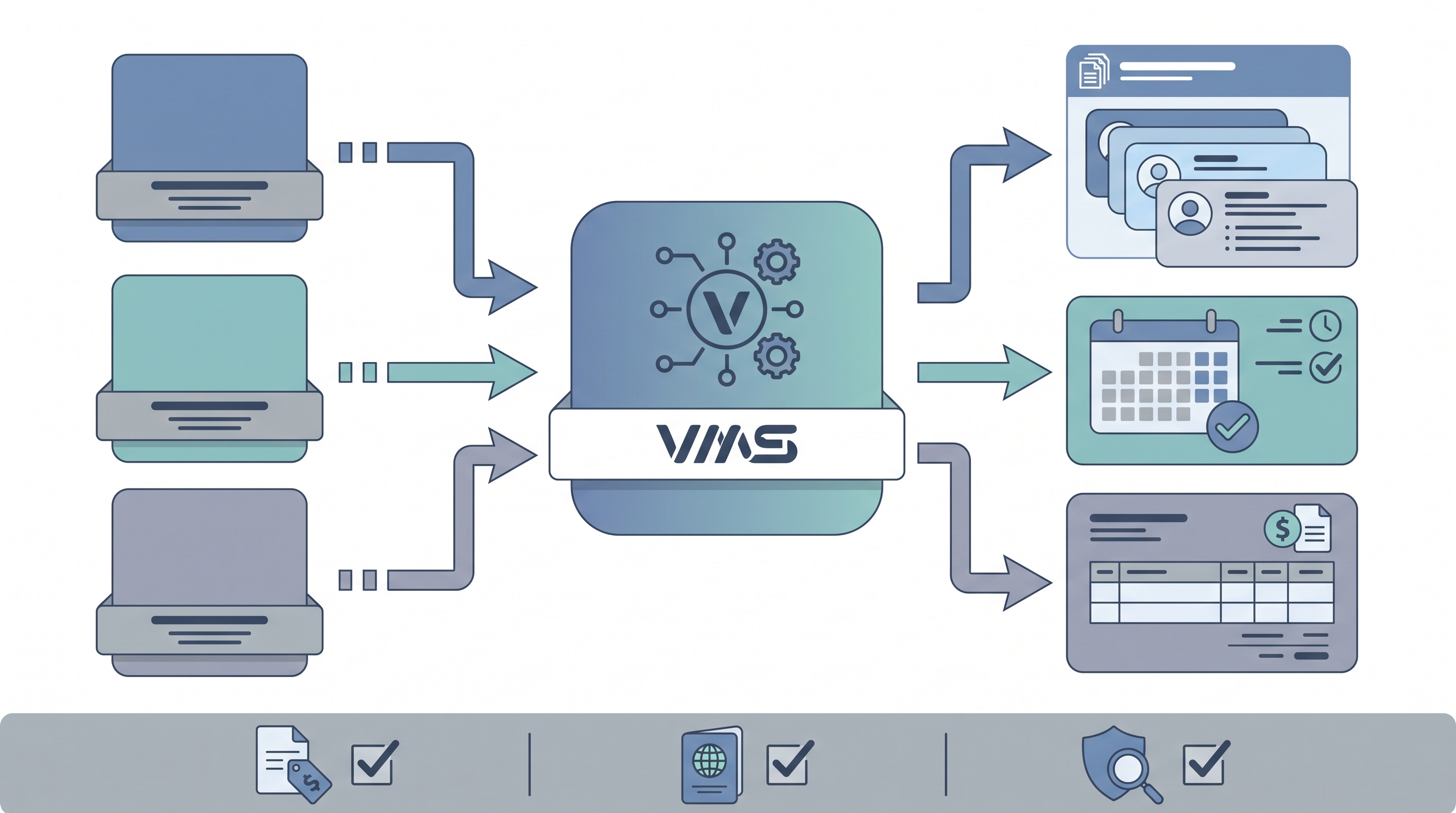
A vendor management system (VMS) is the software platform that sits at the centre of a contingent workforce programme. It manages the flow of work from a contingent requisition opening through supplier submissions, interviews, timesheet approval, invoicing, and compliance documentation.
For TA and procurement teams, a VMS provides the visibility that contingent workforce spend otherwise lacks: which agencies are active, what rates are in place, how each supplier is performing against fill time and quality metrics, and what compliance documentation is current for each worker on engagement.
The context that matters for recruiting teams is that a VMS typically operates separately from the permanent hiring ATS. Contractors and temporary workers flow through the VMS; permanent employees flow through the ATS. Understanding where the boundary sits determines who owns which process and where data handoffs break.
In practice
- A large enterprise runs 300 active contractors across eight agencies. Before implementing a VMS, each agency relationship is managed by a different HR business partner with inconsistent rate cards and no centralised compliance tracking. Post-implementation, all submissions arrive in one platform, rates are locked to the approved card, and quarterly supplier reviews pull directly from performance data in the system.
- A recruiter handling both permanent and contingent reqs logs into two systems every morning: the ATS for permanent pipeline and the VMS for contractor submissions. When a contractor on a six-month engagement becomes a strong hire candidate, the conversion has to be tracked manually because the two systems do not share data.
- During a VMS implementation review, the legal team flags that the AI submission-ranking feature adds an automated employment decision layer that needs a validation study and a bias audit before it can be activated in jurisdictions covered by local AI employment law.
Quick read, then how hiring teams use it
This is for recruiters, TA leaders, and operations partners who encounter VMS platforms in enterprise contingent workforce programmes. Skim the first section for the concept. Use the second when you are operating inside a VMS, evaluating one, or trying to understand why your contractor pipeline runs differently from your permanent one.
Plain-language summary
- What it means for you: A VMS is the system that manages contractor and temporary hiring through staffing agencies, tracking submissions, timesheets, and invoices in one place.
- How you would use it: You post reqs, review agency submissions, approve or reject candidates, approve timesheets, and track performance, all inside the VMS rather than through email or spreadsheets.
- How to get started: If your organisation already has a VMS, ask your procurement or ops team for access and the approved supplier list. If you are evaluating one, start with a process map of your current contingent workflow before looking at platforms.
- When it is a good time: When contingent volume is high enough that tracking agency relationships and rates across multiple business units manually creates compliance risk or budget leakage.
When you are running live reqs and tools
- What it means for you: A VMS controls which agencies see your reqs, what rates they can submit at, and how their performance is tracked. It is also a compliance layer for right-to-work and co-employment risk.
- When it is a good time: Before any significant growth in contingent workforce use, and during annual supplier list reviews.
- How to use it: Treat supplier performance data as a live input to preferred supplier decisions, not just an annual check. Review time-to-fill and submission quality by agency against your rate card.
- How to get started: Map which of your current reqs touch a VMS and which bypass it. Gaps are where co-employment and compliance risk live.
- What to watch for: Rate card exceptions negotiated outside the system, AI submission-ranking tools that add automated employment decision liability, and data quality gaps when the VMS and ATS are not integrated.
Where we talk about this
On AI with Michal live sessions, VMS platforms come up when participants are mapping their full talent acquisition stack, particularly when contingent workforce and permanent hiring share operational processes. The membership community includes operations practitioners who have run VMS implementations and can speak to the integration and governance realities.
Around the web (opinions and rabbit holes)
Third-party creators move fast. Treat these as starting points, not endorsements.
YouTube
- Searches for "vendor management system contingent workforce" and "VMS recruiting programme" surface procurement and HR tech explainers on how enterprise organisations manage agency relationships at scale.
- r/humanresources and r/procurement have candid threads on VMS implementation realities, MSP vs self-managed tradeoffs, and what actually breaks in the agency-to-platform handoff.
Quora
- Searches for "what is a vendor management system HR" and "VMS vs ATS difference" collect practitioner answers worth filtering by company size and contingent programme maturity.
Related on this site
- Glossary: Workflow automation, AI hiring software, Validation study (selection), Applicant tracking system, Talent acquisition metrics
- Program: AI Recruiting Accelerator
- Membership: Become a member