Multi-channel talent sourcing
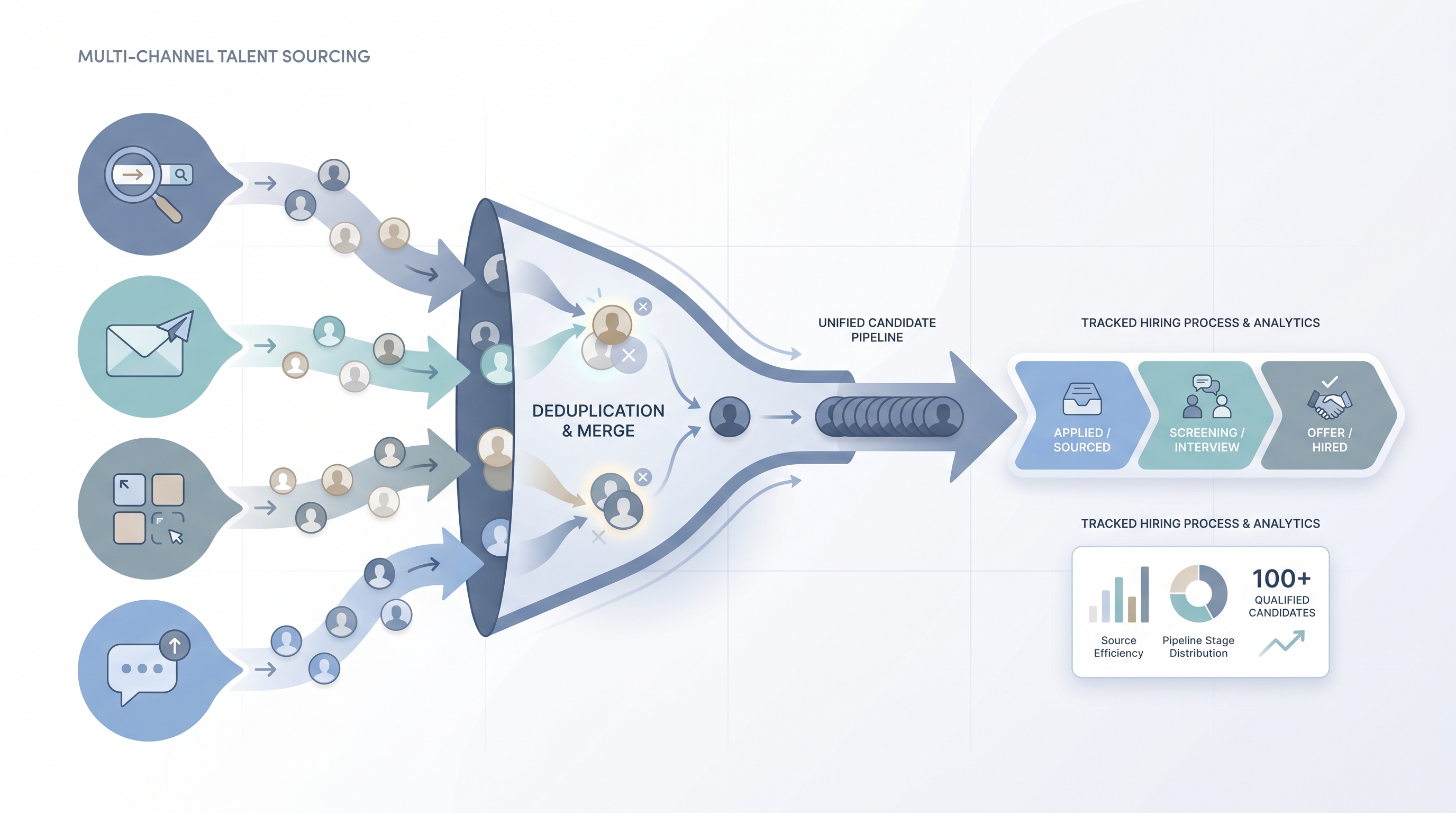
Running simultaneous candidate searches across LinkedIn, GitHub, job boards, referral networks, email databases, and community platforms so the talent pipeline does not stall when any single channel saturates or changes its terms.
Michal Juhas · Last reviewed May 4, 2026
What is multi-channel talent sourcing?
Multi-channel talent sourcing is the practice of running outreach across several candidate-finding platforms at the same time instead of relying on one. LinkedIn gets most of the budget, but it is rarely the only place the right candidate is reachable. A sourcer working a senior data engineering role might run a LinkedIn sequence, parse GitHub profiles for open-source contributors, post in a niche Slack community, and activate a referral ask inside the company, all within the same week.
The goal is not to contact every candidate on every platform. It is to match each channel to the type of candidate most likely to respond there, then track which combination closes the role fastest at acceptable cost.
In practice
- A sourcer building a pipeline for a Rust engineering role creates a LinkedIn sequence, X-rays GitHub for contributors to relevant open-source projects, and posts in a private Rust Discord server. The Discord ping produces the first reply within 48 hours.
- A full-cycle recruiter at a 300-person company combines an Indeed inbound flow with an outbound email campaign to a data provider list, while simultaneously asking two current engineers for referrals. Three distinct channels, one tracking sheet in the ATS.
- A TA ops lead sets a 30-day suppression rule in the CRM: anyone who received a LinkedIn InMail is excluded from the parallel email sequence, so candidates do not get the same message from two different people on the same team.
Quick read, then how hiring teams use it
This is for recruiters, sourcers, TA, and HR partners who need a shared frame for sourcing strategy across tools and channels. Skim the first section for a fast shared picture. Use the second when you are deciding which channels to activate for a specific req.
Plain-language summary
- What it means for you: Instead of sending every message through LinkedIn, you run searches on two or three platforms in parallel and assign each a specific candidate type. Engineers respond on GitHub. Referrals close faster. Job boards catch inbounds you might miss.
- How you would use it: Pick the role, map who you are looking for, choose the two channels most likely to reach that person, and set a suppression rule so you do not contact anyone twice. Track channel at first touch, not at close.
- How to get started: Audit your last ten hires. Write down where each candidate was first found. If nine out of ten came from LinkedIn, your pipeline is one API change away from a crisis. Add one non-LinkedIn channel to your next req and measure response rate.
- When it is a good time: Any time a req has been open more than four weeks without enough qualified responses on the primary channel. Also when entering a new market or hiring for a role type your team has not placed before.
When you are running live reqs and tools
- What it means for you: Multi-channel sourcing requires deduplication infrastructure, not just intent. A shared CRM field or ATS tag for "first touch channel" is the minimum. Without it, two sourcers running parallel campaigns will contact the same person twice, which candidates read as disorganization.
- When it is a good time: After you have at least one reliable outbound channel working well. Adding channels before you have a baseline means you cannot measure which one moved the needle.
- How to use it: Connect your sourcing tool to your ATS so candidate records are deduplicated before sequences launch. Set suppression windows (30 days minimum). Use workflow automation to route inbounds from different channels into the same pipeline stage, not separate queues that only one recruiter checks.
- How to get started: Run a 30-day pilot with two channels. Agree on suppression rules and first-touch tracking fields before you start, and review source-of-response data at the end. Only then decide whether to add a third channel.
- What to watch for: Platform rate limits (LinkedIn, email providers), GDPR consent requirements for data sources not directly provided by the candidate, and sequences that go quiet because one recruiter is out and no one owns that channel. Name a channel owner for each active campaign.
Where we talk about this
On AI with Michal live sessions we build this in real time: sourcing automation blocks cover deduplication rules, API keys, and what happens when LinkedIn changes a filter, while AI in recruiting blocks show how to wire a model into the drafting step without losing the human review gate. If you want the full room conversation with real stack questions, start at Sourcing Lab and bring your active reqs and channel budget.
Around the web (opinions and rabbit holes)
Third-party creators move fast. Treat these as starting points, not endorsements, and double-check anything before you wire candidate data across platforms.
YouTube
- Multi-channel sourcing + SourceCon for walkthroughs that combine LinkedIn, GitHub, and community platforms in one workflow.
- Glen Cathey + X-ray + channel selection for cross-platform X-ray search and persona-based channel selection for niche technical and executive roles; his content is among the most cited in the professional sourcing community.
- r/Sourcing is an active dedicated community; filter by top posts and search "channels" or "response rate" for honest practitioner data on what works beyond LinkedIn.
- r/recruiting surfaces agency and in-house perspectives; search "sourcing channels" to find threads on platform fatigue and multi-channel budget allocation.
Quora
- Quora search: multi-channel talent sourcing returns a mix of practitioner and consultant answers on channel mix for hard-to-fill roles; read credentials before following specific tool or sequence recommendations.
Single-channel versus multi-channel sourcing
| Dimension | Single channel | Multi-channel |
|---|---|---|
| Setup time | Low | Medium to high |
| Deduplication risk | Minimal | Requires active rules |
| Platform dependency | High | Distributed |
| Source-of-hire visibility | Simple | Requires ATS discipline |
| Coverage for niche roles | Often insufficient | Broader reach |
Related on this site
- Glossary: Boolean search, Candidate data enrichment, Workflow automation, Human-in-the-loop (HITL), Talent acquisition metrics, Proprietary talent pool
- Blog: AI sourcing tools for recruiters
- Live cohort: Sourcing Lab
- Membership: Become a member