AI slop
Generic model output that reads long, vague, and obviously templated, usually because the prompt lacked context, examples, and channel-specific constraints.
Michal Juhas · Last reviewed May 2, 2026
What is AI slop?
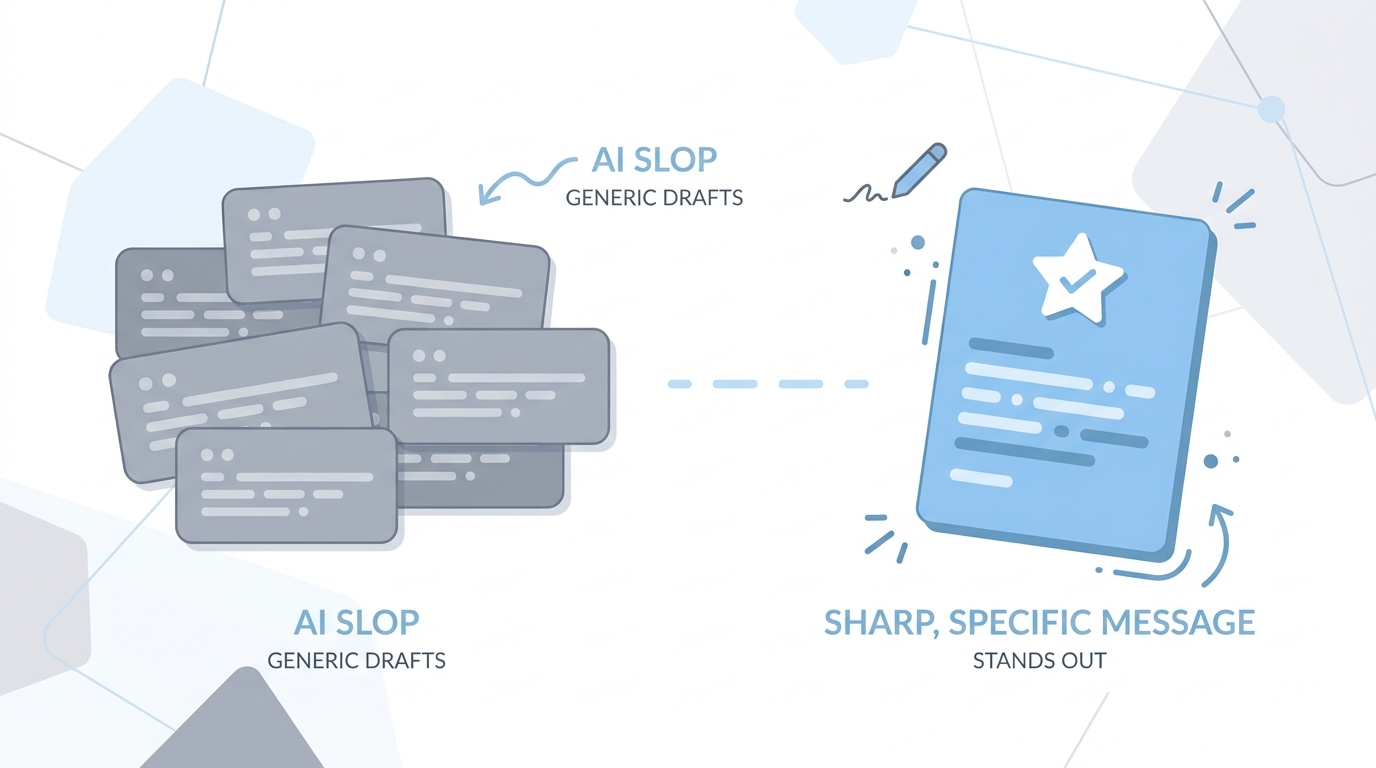
AI slop is a casual name for bland, generic text that reads like a cheap template and turns people off. It usually happens when nobody adds real facts, edits, or a clear point of view.
In practice
- Candidates joke in forums about identical outreach that opens with "I came across your profile" and three vague compliments. Twitter and Reddit use "AI slop" for that bland, samey tone in text and images.
- Hiring managers forward a draft JD and write "this feels like ChatGPT" when it is padded, generic, and sounds like every other company.
- Internal comms teams warn marketers not to ship "slop" when brand voice disappears behind bland blocks nobody edited.
Quick read, then how hiring teams use it
This is for recruiters, sourcers, TA, and HR partners who need the same vocabulary in debriefs, vendor calls, and policy reviews. Skim the first section when you need a fast shared picture. Use the second when you are deciding how it shows up in the ATS, sourcing tools, or candidate communications.
Plain-language summary
- What it means for you: Slop is when text looks fine at a glance but feels the same as every other email: vague praise, fake warmth, and no proof anyone read your profile.
- How you would use it: You use the label to coach teammates: "this reads like slop" means tighten facts and voice, not "never use AI."
- How to get started: Collect three outbound messages you would not answer yourself. Highlight the fluffy lines. Replace them with one specific fact from the profile or posting.
- When it is a good time: When response rates drop after you "scaled" outreach, or when hiring managers say candidates sound like bots.
When you are running live reqs and tools
- What it means for you: Slop is a failure mode of cheap generation: low marginal cost per draft, weak system instructions, no structured output, and no human taste pass.
- When it is a good time: When you review employer brand, recruiter scorecards, or vendor templates that ship to thousands.
- How to use it: Add constraints (must quote two resume facts, ban words like "delve"), rotate examples in few-shot prompting, and keep a living "do not sound like this" folder.
- How to get started: Re-read How to write better AI prompts and audit ten sends from last week.
- What to watch for: Blaming the model instead of the prompt, and declaring victory when volume went up but quality signals went flat.
Where we talk about this
Workshops name slop when we compare drafts side by side: same hallucination guardrails apply whether the text came from ChatGPT or a tired human pasting a 2021 template. Join Sourcing Lab if you want live critique of real snippets.
Around the web (opinions and rabbit holes)
Third-party creators move fast. Treat these as starting points, not endorsements, and double-check anything before you wire candidate data.
YouTube
- I Can Spot AI Writing Instantly - Here's How You Can Too (Evan Edinger) is a practical clip to train hiring managers on "sounds like bot" tells.
- How To Detect AI Writing in 2024 stays practical for teams reviewing outbound at scale.
- How to Detect AI Written Content is another short format comparison if you want a second voice.
- A heads-up for all job seekers: Your ChatGPT-written application is very obvious in r/Resume flips the lens to candidate slop recruiters see daily.
- Please stop using ChatGPT on your applications in r/recruitinghell is harsh but captures tone fatigue.
- How experienced recruiters spot ChatGPT written CVs in r/jobsearchhacks lists tells people train on.
Quora
- How does YouTube detect AI slop content? is platform-specific but still useful vocabulary on "samey" generation.
Symptom checklist
| Signal | Likely missing input |
|---|---|
| Generic praise | Role and company specifics |
| Wall of bullets | Length cap in instructions |
| Wrong tone | No negative examples |
Related on this site
- Glossary: System instructions, Few-shot prompting, Hallucination
- Blog: How to write better AI prompts, ChatGPT prompts for recruiters
- Membership: Become a member