AI tools for hiring
Software products that use machine learning or large language models to assist specific tasks across the employer hiring lifecycle, from sourcing and outreach drafting to resume review, interview summarisation, offer analytics, and pipeline reporting.
Michal Juhas · Last reviewed May 10, 2026
What are AI tools for hiring?
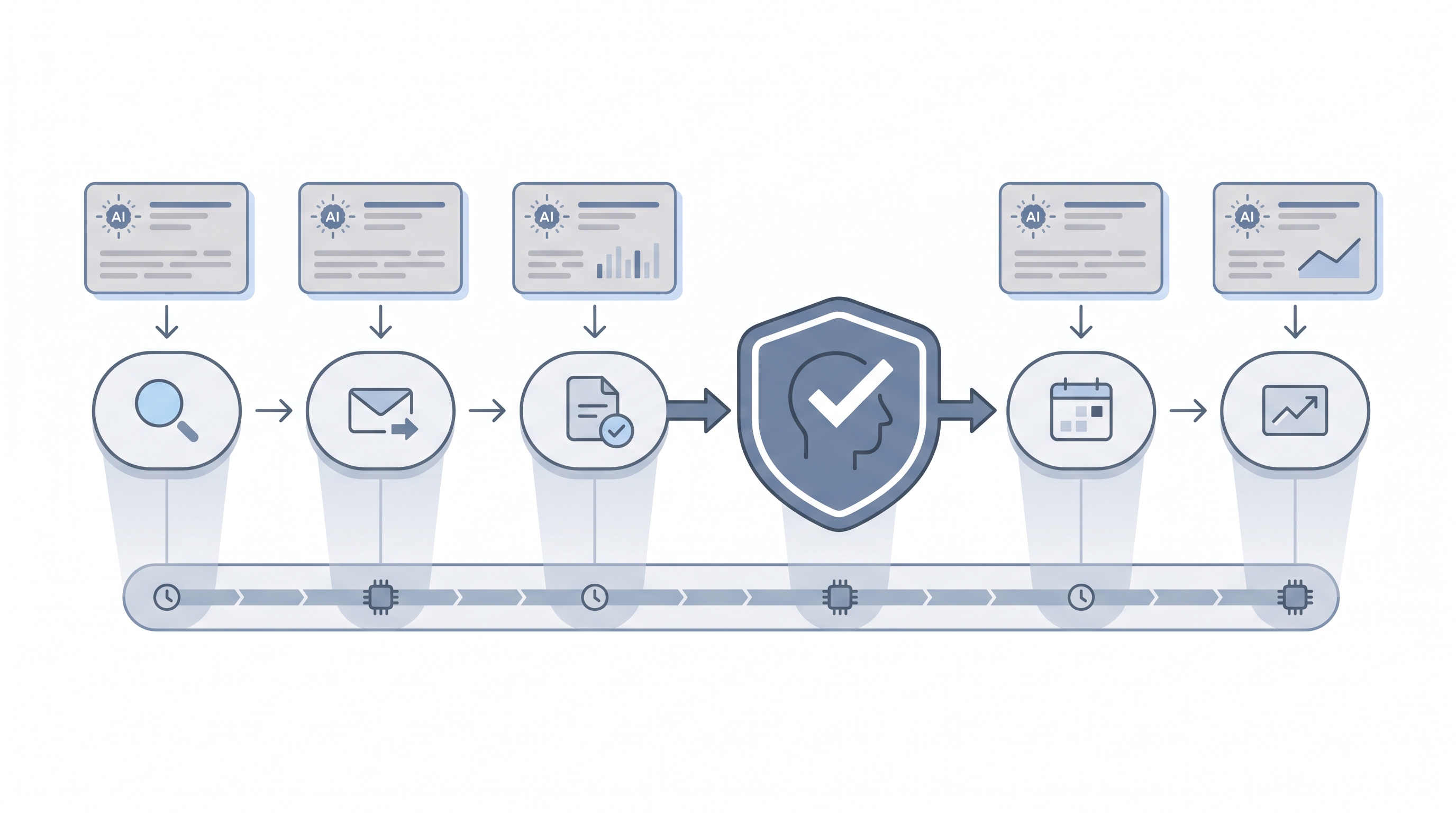
AI tools for hiring are software products that use machine learning or language models to handle a specific task in the hiring process that a recruiter previously managed by hand. The category spans sourcing tools that surface passive candidates via semantic search, outreach assistants that draft personalised messages at scale, resume parsing engines that extract structured data from CVs, interview intelligence tools that turn transcripts into structured notes, scheduling tools that eliminate calendar back-and-forth, and analytics copilots that flag where the pipeline is stalling.
What ties them together is that the tool makes a recommendation or takes an action based on pattern recognition in language or data. That is different from a traditional ATS routing records through stages. It also means the accountability structure is different: when AI ranks or screens, you need an audit trail that a routing rule does not require.
In practice
- A sourcer who says "the tool surfaced 30 matched profiles and I shortlisted 8" is using an AI hiring tool the way it works best: high-volume first pass, human judgment on the shortlist.
- When a TA lead asks "did the AI reject this applicant or did the team?" and no one can answer, the team is missing the audit log that makes AI-assisted hiring defensible in an employment review.
- Running a four-week parallel test, AI tool recommendations alongside manual recruiter decisions on the same role type, is the standard calibration method before committing a tool to full deployment on live reqs.
Quick read, then how hiring teams use it
This is for recruiters, sourcers, TA leads, and HRBPs who need to evaluate, configure, or explain AI-assisted decisions across the hiring funnel. Skim the first section for a shared vocabulary. Use the second when you are making purchasing or deployment decisions on live work.
Plain-language summary
- What it means for you: AI hiring tools handle the high-volume repetitive steps, sourcing, screening, drafting, so you spend more time on judgment calls and less on tasks that only need pattern recognition.
- How you would use it: Pick one stage that costs your team the most time per open req and ask whether an AI tool could produce a first draft or a shortlist for you to review rather than build from scratch.
- How to get started: Audit which stage costs the most recruiter hours per week. If it is sourcing or CV review, those are the strongest starting points. One tool, one role type, four weeks running in parallel with your current process before you retire anything.
- When it is a good time: When your volume of applications or sourcing targets has grown past what the team can review at the quality level you need to maintain, and after you have confirmed the tool has a review gate before candidate-facing actions.
When you are running live reqs and tools
- What it means for you: Every AI recommendation in your hiring funnel is a decision with an audit trail obligation: which model version, which prompt, who reviewed, who advanced or rejected.
- When it is a good time: Before adding any AI tool to early-funnel steps at volume, when bias risk, GDPR automated decision obligations, and data residency requirements all converge on the same tool decision.
- How to use it: Log model versions and output scores alongside candidate records. Keep a human-in-the-loop gate between any AI recommendation and a candidate-affecting action. Run an AI bias audit on any screening or ranking tool before high-volume deployment.
- How to get started: Map every AI tool currently in your stack. For each: who owns it, where candidate PII goes after processing, and whether anyone reviewed the bias profile and accuracy rate before it went live. Most teams find at least one tool that went from demo to production without a compliance review.
- What to watch for: Vendors rebadging existing tools as AI-powered without disclosing the underlying model. AI scoring outputs copy-pasted to candidate decisions without human review. Score thresholds shifting after a model update the vendor did not announce.
Where we talk about this
On AI with Michal live sessions AI tools for hiring come up across both main tracks. The AI in recruiting track covers tool evaluation, AI feature claims versus production reality, and where human-in-the-loop gates belong in a real stack. The sourcing automation track goes deeper on how tools hand off data between stages, which integrations break under real load, and what to audit before a vendor touches high-volume reqs. Bring your current tool list and your biggest friction point to Sourcing Lab for a conversation grounded in real hiring contexts.
Around the web (opinions and rabbit holes)
Third-party creators cover this space at high speed and mixed depth. These are starting points, not endorsements. Verify compliance postures and integration claims directly with vendors before purchase.
YouTube
- AI tools for hiring 2025 review shows practitioner walkthroughs of live tool setups with honest observations on what held up under real hiring volume.
- Best AI hiring tools compared includes head-to-head evaluations by TA leads who ran trials on real role types and company sizes.
- How to evaluate AI hiring software covers the compliance and bias evaluation process alongside feature comparisons for recruiting teams.
- What AI tools are you using in hiring? in r/recruiting collects candid in-production reports from practitioners across company sizes.
- AI hiring tools that actually work in r/recruiting separates vendor claims from what survives production volume and contract renewals.
- Has anyone had bias issues with AI hiring tools? in r/recruiting surfaces failure stories alongside tools that held up under scrutiny.
Quora
- What are the best AI tools for hiring managers? gathers practitioner recommendations with varying levels of context; cross-reference with recent Reddit threads before forming a shortlist.
AI tools for hiring by funnel stage
| Funnel stage | AI tool category | What to log |
|---|---|---|
| Sourcing | Semantic search, profile ranking | Query used, profiles surfaced, model version |
| Outreach | Drafting assistants | Prompt template, edit rate, human approval |
| Screening | CV parsing, scoring AI | Score per candidate, model version, reviewer |
| Interviews | Transcription, scheduling | Consent recorded, summary accuracy, reviewer |
| Pipeline | Analytics copilots, nudges | Nudge trigger, action taken, outcome |
Related on this site
- Glossary: AI tools for recruitment, AI hiring tools, AI for hiring, AI recruiting tools, Applicant tracking software, Semantic search, Resume parsing, AI bias audit, Human-in-the-loop, Workflow automation
- Blog: AI sourcing tools for recruiters
- Guides: Sourcers
- Workshops: Sourcing Lab
- Membership: Become a member
- Courses: Starting with AI: the foundations in recruiting