Sourcing ROI
A set of metrics that connect sourcing channel spend (time, tools, fees) to qualified pipeline and eventual hires, so TA teams can direct effort and budget toward the sources that produce the most value at the lowest cost.
Michal Juhas · Last reviewed June 14, 2026
What is sourcing ROI?
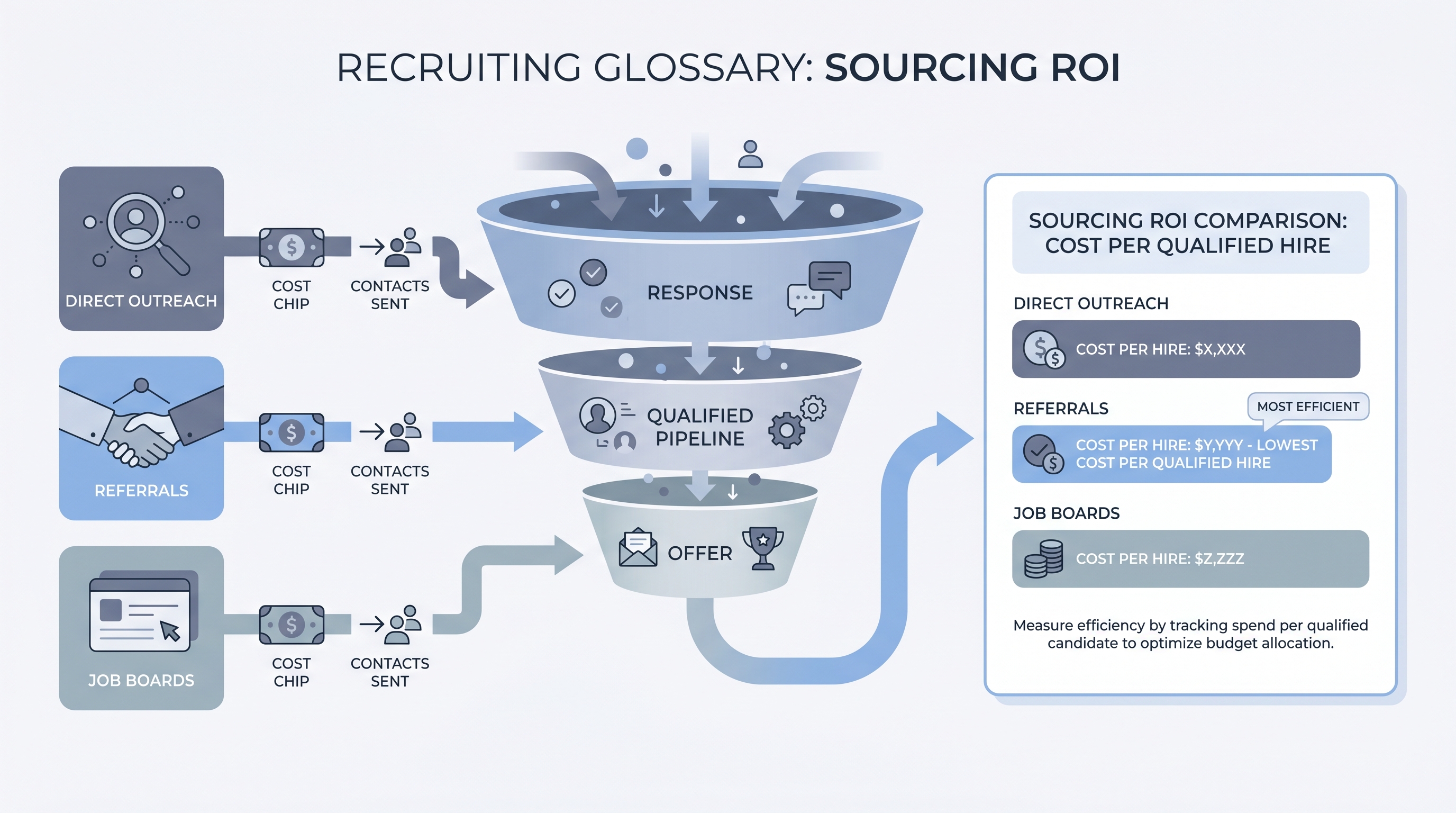
Sourcing ROI connects every hour, tool subscription, and agency fee spent on finding candidates to the qualified pipeline and hired outcomes that spending produced. It answers the question a head of talent or CFO will eventually ask: "Which of our sourcing channels is actually worth the money?" Without this data, TA teams defend budgets with activity metrics (contacts sent, InMails used) that do not speak the same language as finance or operations.
In practice
- A sourcing lead runs a quarterly channel report that shows LinkedIn sourcing, employee referrals, and agency hires side by side: cost per channel, hires attributed, and average time-to-offer. Employee referrals cost 40 percent less per hire and close three weeks faster. She reallocates 15 percent of the agency fee budget to a referral incentive program.
- After deploying an AI outreach tool for three months, a sourcer compares response rates before and after. The tool increased outreach volume by 2x but response rate dropped from 18 to 11 percent. Qualified pipeline rate stayed flat. The ROI case is weaker than the vendor claimed.
- A TA manager builds a simple attribution rule in the ATS: the first-added source field gets credited for the hire. This single standard ends six months of arguments about which channel deserves credit for engineers who appeared in two pipelines simultaneously.
Quick read, then how hiring teams use it
This is for sourcers, TA leads, and recruiting operations professionals who own sourcing budgets or report on sourcing effectiveness. Skim the first section to get a shared vocabulary. Use the second when you are building a sourcing channel report or preparing a budget justification.
Plain-language summary
- What it means for you: Knowing which sources produce quality hires at what cost lets you invest more in what works and stop paying for what does not.
- How you would use it: Build a simple tracking table: source, hires, total cost, cost per hire, and average days to close. Review it before every budget conversation.
- How to get started: Pull the last 12 months of hired candidates from your ATS. Group them by first-recorded source. Calculate total spend per source category. You now have a baseline.
- When it is a good time: When a sourcing tool contract is up for renewal, when agency spend exceeds 30 percent of total TA spend, and before every annual planning cycle.
When you are running live reqs and tools
- What it means for you: At scale, sourcing ROI is the signal that tells you whether to double down on AI tooling, shift budget from job boards to direct sourcing, or renegotiate agency terms.
- When it is a good time: Monthly for channel monitoring, quarterly for budget reallocation, and immediately when a conversion metric drops more than 20 percent below your baseline.
- How to use it: Connect your ATS source field to a reporting layer (a Looker dashboard, a BI tool, or a structured export to a spreadsheet). Build conversion funnels by source using sourcing funnel metrics. Flag any channel where qualified pipeline rate drops below 20 percent of contacts.
- How to get started: Audit your ATS source field for the last 90 days. Clean up inconsistent values (LinkedIn, LinkedIn Recruiter, and LI are the same channel). Set a standard taxonomy and train every recruiter on it. Clean data is the prerequisite for accurate ROI.
- What to watch for: Contact-count vanity metrics from AI tools that inflate the top of the funnel without improving qualified pipeline. Sourcing ROI is measured at the qualified response and hired stages, not at contacts sent.
Where we talk about this
On AI with Michal live sessions, sourcing ROI comes up in the sourcing automation track when we discuss how to evaluate tools and justify spend. If you want to build a channel attribution model in a session with peers, start at the AI Recruiting Accelerator and bring your current channel mix and cost data.
Around the web (opinions and rabbit holes)
Third-party creators move fast. Treat these as starting points, not endorsements, and double-check anything before wiring candidate data.
YouTube
- Recruiting Metrics That Matter: Cost Per Hire and Source of Hire (LinkedIn Talent Solutions) covers the two metrics most tied to sourcing ROI for in-house teams.
- How to Build a Sourcing Dashboard (SourceCon) walks through the data model behind channel attribution for sourcing teams.
- How do you measure sourcing ROI? in r/recruiting is a raw thread showing how teams with different ATS setups approach the attribution problem.
- Justifying LinkedIn Recruiter cost to leadership in r/recruiting has practical framing for the budget conversation with non-recruiting stakeholders.
Quora
- How do companies measure the effectiveness of their talent sourcing channels? collects answers from in-house TA leaders and sourcing consultants with different attribution approaches.
Related on this site
- Glossary: Sourcing funnel metrics, Talent acquisition metrics, Talent acquisition budget, AI outreach drafting, Candidate data enrichment
- Blog: AI sourcing tools for recruiters
- Guides: Sourcers
- Live cohort: AI Sourcing Lab
- Membership: Become a member