AI-based hiring platform
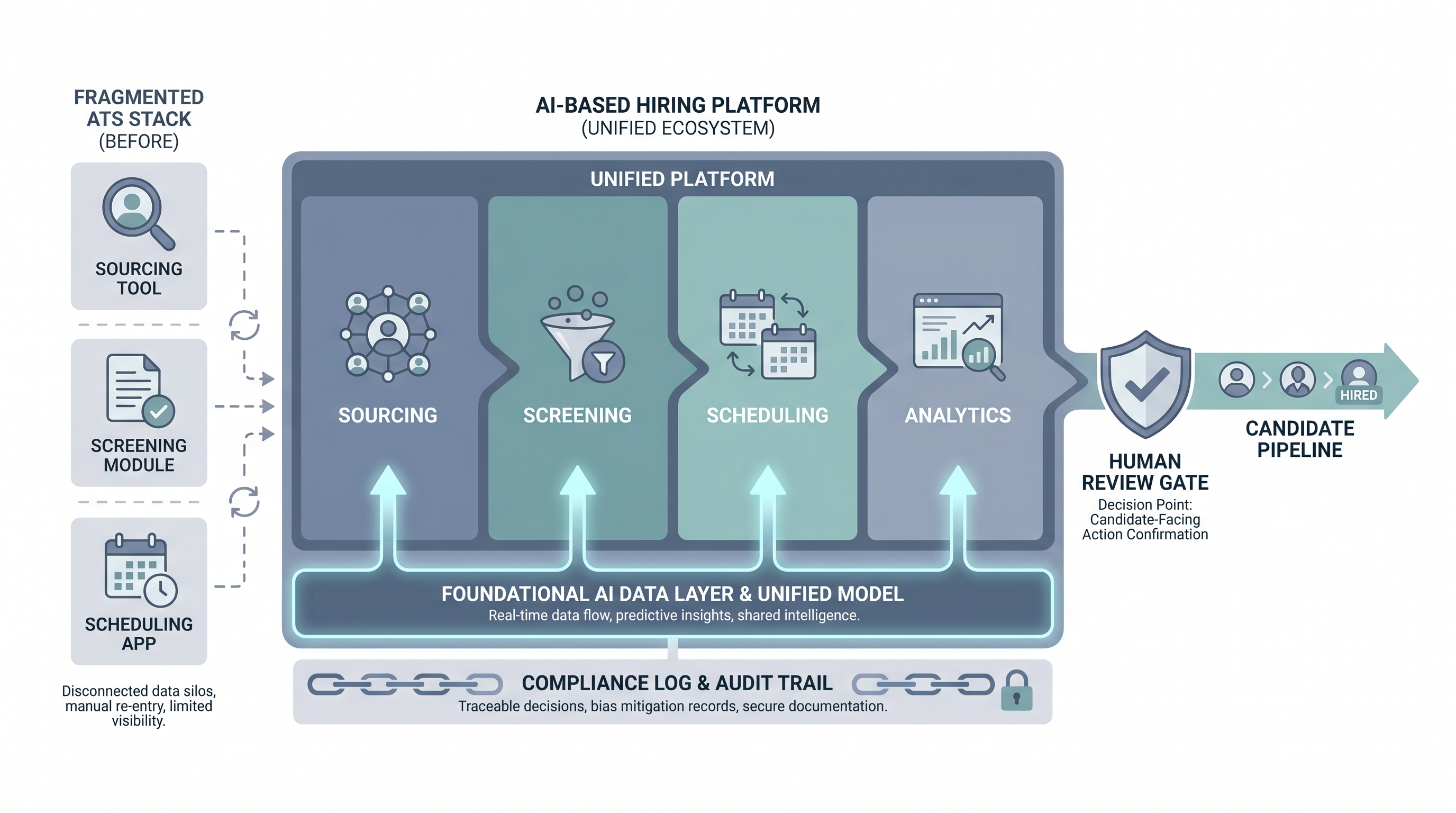
A recruitment software system where AI is the foundational architecture rather than a bolt-on feature set: sourcing, screening, scheduling, and analytics share a unified candidate data model so AI-driven matching, ranking, and timing decisions flow between modules without manual re-entry.
Michal Juhas · Last reviewed May 9, 2026
What is an AI-based hiring platform?
An AI-based hiring platform is hiring software built with AI as the foundational architecture, not as a feature layer applied on top. The distinction is in how the data model is designed: in an AI-based system, candidate records, job descriptions, sourcing signals, and evaluation outputs share a unified structure that AI models query and update continuously. Matching, ranking, outreach timing, and deduplication happen through AI inference rather than through rules or stage-based logic configured by an administrator.
This differs from an applicant tracking system with AI features added on. A traditional ATS moves candidates through defined stages; AI functionality in that model is bolt-on, summarising or drafting within an existing workflow. An AI-based platform inverts the relationship: the AI determines what surfaces, when, and to whom, and the pipeline view reflects those decisions rather than driving them.
In practice, the architectural difference shows up in edge cases: how the platform handles a candidate who applied eighteen months ago, whether sourced and inbound candidates deduplicate into one record, and how pass-rate drift across demographic groups is monitored and surfaced to the recruiting team rather than buried in a vendor dashboard.
In practice
- A sourcing team loading a new req into an AI-based platform does not start by filtering a resume database. The platform surfaces candidates it has already matched from previous searches, past applicants, and talent community members, with a freshness score and an outreach timing recommendation. The recruiter reviews the shortlist rather than building it from scratch.
- When a TA ops lead says the platform flagged a pass-rate anomaly, they mean the AI layer detected that one screening criterion was rejecting a protected group at more than four-fifths the rate of the majority group and surfaced it before the next weekly review, not after a bias complaint arrived.
- Vendor demos for AI-based platforms often look identical to ATS demos because the pipeline UI is similar. The difference surfaces in the RFP stage when you ask: can you show a candidate who was sourced, rejected, and re-surfaced eighteen months later? If the answer requires a manual search, the AI is a feature, not the architecture.
Quick read, then how hiring teams use it
This is for recruiters, TA leads, and HR ops partners who need to evaluate hiring software, explain trade-offs to procurement, or understand what a vendor means when they call their product AI-based. Skim the summary for a shared vocabulary. Use the operational section when comparing platforms or scoping an implementation.
Plain-language summary
- What it means for you: An AI-based hiring platform surfaces the right candidates at the right moment from every previous interaction your team has had, rather than waiting for you to search each time.
- How you would use it: You set intake criteria and review AI-curated shortlists rather than building searches. You own the review gates, the error inbox, and the bias audit cadence.
- How to get started: Run a scorecard-based vendor review before any demo. Score data portability, explainability, bias monitoring, API stability, and data residency. Bring that scorecard into every vendor meeting.
- When it is a good time: When you have enough structured historical hiring data to train a model that is not encoding your past mistakes, and when your team has a named owner for error monitoring and pass-rate reviews before go-live.
When you are running live reqs and tools
- What it means for you: AI-based means the platform updates candidate state, changes ranking signals, and times outreach without a recruiter manually triggering each step. When the automation silently fails, the error is in the pipeline before anyone notices.
- When it is a good time: When the criteria you are optimising for are stable and agreed, when GDPR and state AI employment law compliance is documented before you wire candidate-facing decisions to the AI layer, and when one person owns the pass-rate audit schedule.
- How to use it: Pair the platform outputs with structured human review gates before any candidate-facing action. Log which model version scored which candidate. Run an adverse impact review quarterly, not annually.
- How to get started: Start with one module, sourcing or screening, not the full stack. Validate AI shortlist quality against what a recruiter would have chosen manually for two weeks before removing the manual step. Read the sub-processor list before signing the DPA.
- What to watch for: Pass-rate drift across demographic groups that surfaces slowly, outreach timing decisions that violate opt-out preferences stored in a disconnected CRM, candidate deduplication failures that create duplicate outreach, and model drift after a platform update that changes scoring logic without a changelog.
Where we talk about this
On AI with Michal live sessions, platform evaluation is a recurring topic in sourcing automation and AI in recruiting tracks: what questions to ask vendors, how to read a DPA, and what the governance responsibilities of the hiring team are when the vendor runs the model. If you are in the middle of an RFP or comparing shortlisted vendors, start at Sourcing Lab and bring the platform names, your integration requirements, and the name of the person who would own the error inbox.
Around the web (opinions and rabbit holes)
Third-party creators move fast here. Treat these as starting points, not endorsements, and verify compliance postures and data handling practices directly with vendors before signing anything.
YouTube
- How to Automate Your Entire Hiring Process with n8n and Notion (Michele Torti) shows a practitioner-built hiring workflow that illustrates the difference between a stack of bolted-on tools and an integrated flow, useful context before evaluating all-in-one platforms.
- n8n Tutorial: Build an AI HR Assistant That Shortlist… demonstrates how AI scoring logic works when built from scratch, which helps you ask better questions of platform vendors who describe the same logic as proprietary.
- Boost Your Productivity: Mastering the Power of Workflow Automation (DottoTech) covers automation vocabulary before you enter a vendor conversation about triggers, actions, and AI orchestration layers.
- How are you actually using AI in your recruiting workflow right now? in r/recruiting distinguishes genuine AI platform adoption from bolt-on feature use, from practitioners who have used both.
- Has anyone used Zapier? in r/recruiting shows the integration workarounds that a well-connected AI-based platform is supposed to eliminate, useful for scoping what you are replacing.
- I want to make some recruitment automated workflows but… in r/RecruitmentAgencies is an honest starting-point thread from practitioners working through the build-versus-buy decision.
Quora
- What are the best AI tools for recruitment and hiring? collects practitioner answers with varying depth; read for the evaluation criteria people mention alongside the platform names.
AI-based hiring platform versus ATS with AI add-ons
| Dimension | ATS with AI add-ons | AI-based hiring platform |
|---|---|---|
| Data model design | Stage-centric pipeline | Candidate-centric AI data model |
| AI role | Feature helper inside existing workflow | Engine driving workflow logic |
| Candidate deduplication | Often rule-based or manual | AI-resolved across all sources |
| Historical reactivation | Manual search required | AI-surfaced by intent and timing signals |
| Pass-rate monitoring | On-request from vendor dashboard | Continuous alerts built in |
| Governance burden | Lower (human initiates each step) | Higher (AI initiates, human audits) |
Related on this site
- Glossary: AI hiring platform, AI recruitment platform, AI-based recruiting, AI powered recruiting, AI recruiting solutions, Adverse impact, AI bias audit, Human-in-the-loop, Applicant tracking software
- Blog: AI sourcing tools for recruiters
- Guides: Sourcers
- Workshops: AI Sourcing Lab
- Courses: Starting with AI: the foundations in recruiting
- Membership: Become a member