AI recruitment platform
A category of hiring software that integrates AI capabilities across the full hiring funnel, from job posting and sourcing through screening, scheduling, and analytics, designed as a connected system rather than isolated point tools.
Michal Juhas · Last reviewed May 4, 2026
What is an AI recruitment platform?
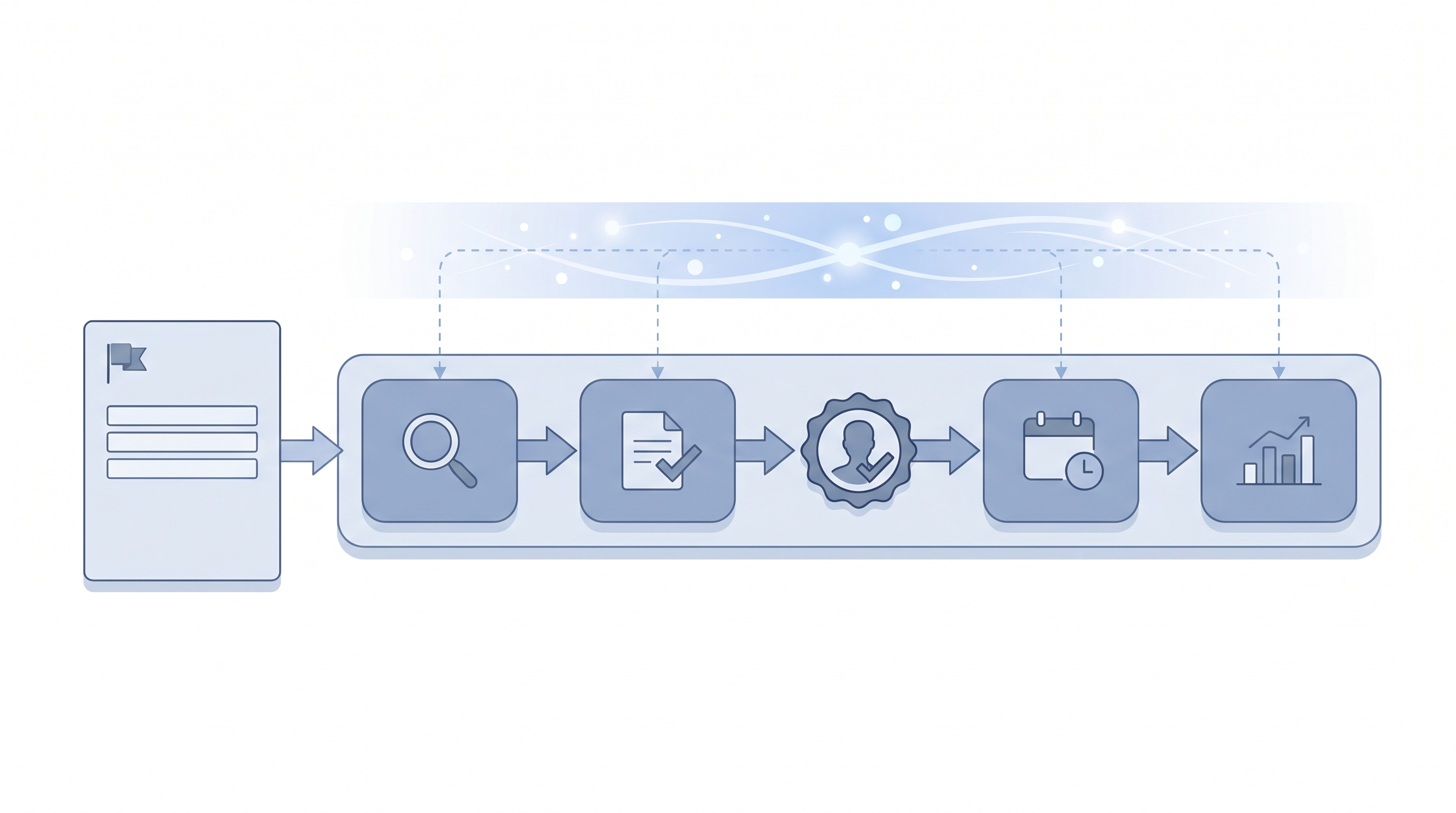
An AI recruitment platform is software that uses AI across the full hiring funnel as a connected system. Rather than running a separate tool for sourcing, a different one for screening, and a third for scheduling, the platform passes candidate data between those stages automatically, using language models and automation to reduce manual handoffs.
The distinguishing feature is integration: the platform carries context about a candidate from sourcing through screening and into interview scheduling. A traditional ATS tracks stages; an AI recruitment platform acts on them.
In practice
- A TA director says their team "moved to an AI platform" when they mean sourcing, screening, and scheduling now run in one tool instead of three; the conversation in a debrief is about which stages the AI touched and who reviewed each one.
- A sourcer encounters an "AI shortlist" in a new platform and has no idea which resume fields it scored on; that missing transparency is a compliance risk, not just a UX gap.
- In a vendor demo, the AI recruitment platform looks seamless; in week three of the pilot, the ATS integration is still pending and recruiters are copy-pasting between systems, which is the moment the "platform" promise breaks down.
Quick read, then how hiring teams use it
This is for recruiters, TA leads, HR ops, and HRBPs who are evaluating, piloting, or setting policy for AI recruitment platforms. Skim the first section for a shared vocabulary. Use the second for operational and vendor-selection decisions.
Plain-language summary
- What it means for you: An AI recruitment platform handles multiple hiring stages in one place, so sourcing, screening, and scheduling share the same candidate record instead of living in three tools that do not talk to each other.
- How you would use it: Post a role, let the platform surface and score candidates, review the shortlist with the hiring manager, and advance finalists to interviews, all without switching tools or re-entering data.
- How to get started: Pick one active role family and run the platform in parallel with your current process for six weeks. Log what it gets right and wrong before expanding.
- When it is a good time: After your intake process is stable and documented, so the AI amplifies a working workflow rather than automating a broken one.
When you are running live reqs and tools
- What it means for you: An AI recruitment platform handles candidate PII across multiple stages and may influence who receives human attention, which means vendor DPAs, model version logging, and bias checks matter from day one of the pilot.
- When it is a good time: Before a high-volume hiring sprint or after conversion data shows a bottleneck in screening or scheduling that human bandwidth alone cannot clear within target time to fill.
- How to use it: Log model version and confidence score next to each AI suggestion; run a bias check on any score that influences shortlisting; set a human-in-the-loop gate before candidate-facing communications and before reject decisions.
- How to get started: Run a pilot on roles you have already closed so you can compare the platform's shortlist to the people you actually hired. The gaps point to calibration problems before they reach live candidates.
- What to watch for: Tools that hide scoring logic, vendors who use your candidate data to retrain shared models, and output formats designed for a different ATS than the one you run. Get all three clarified in writing before the contract is signed.
Where we talk about this
On AI with Michal live sessions, platform evaluation is a recurring thread in both tracks: AI in recruiting blocks cover how to score a vendor demo, spot hallucination risk in shortlisting, and build an internal bias-check routine; sourcing automation sessions cover the integration layer and what breaks when the ATS API is slower than the vendor promised. If you want to walk through a real evaluation with peers, start at Sourcing Lab and bring the contract or RFP you are currently working through.
Around the web (opinions and rabbit holes)
Third-party creators move fast in this space. Treat these as starting points, not endorsements, and verify capabilities and compliance postures directly with vendors before wiring candidate data.
YouTube
- Introduction to Large Language Models (Google Cloud Tech) explains why AI recruitment platforms inherit hallucination and context-limit tradeoffs from the models they run on.
- The AI Adoption Curve Explained (IBM Technology) helps frame platform adoption in a maturity conversation with leadership rather than a feature checklist.
- Generative AI in 9 Minutes (Fireship) is a fast technical reset useful before evaluating any vendor claim about what their platform's AI actually does.
- What AI tools are you using in your recruitment workflow? in r/recruiting is a candid round-up of how sourcers combine platforms and point tools day to day.
- AI in recruiting in r/recruiting covers debate on where integrated AI platforms add value versus where they create noise.
- Has anyone tried AI to help with high volume recruiting? in r/Recruitment has practical results with honest caveats about where platforms underdeliver versus demos.
Quora
- How is AI being used in recruitment? collects practitioner views across sourcing, screening, and scheduling, with useful disagreements about what qualifies as a real AI platform versus a rebranded ATS.
AI recruitment platform versus adjacent categories
| Category | Primary function | AI role |
|---|---|---|
| Traditional ATS | Stage tracking and compliance | Optional add-on or plugin |
| AI recruitment platform | End-to-end funnel with AI at core | Central to sourcing, scoring, scheduling |
| Point tool (sourcing or screening AI) | One step only | Deep but narrow |
| Recruiter AI assistant | Prompt-based draft and analysis | Broad but stateless across sessions |
Related on this site
- Glossary: Recruiter AI, Workflow automation, Semantic search, AI bias audit, Human-in-the-loop, Hallucination, Resume parsing, Time to fill, Async screening
- Blog: AI sourcing tools for recruiters
- Guides: Sourcers
- Workshops: Sourcing Lab
- Courses: Starting with AI: the foundations in recruiting
- Membership: Become a member