Candidate nurturing
A structured sequence of emails, messages, or content sent to prospective candidates over time to build employer brand visibility and keep warm leads engaged until a relevant role opens or they are ready to apply.
Michal Juhas · Last reviewed May 23, 2026
What is candidate nurturing?
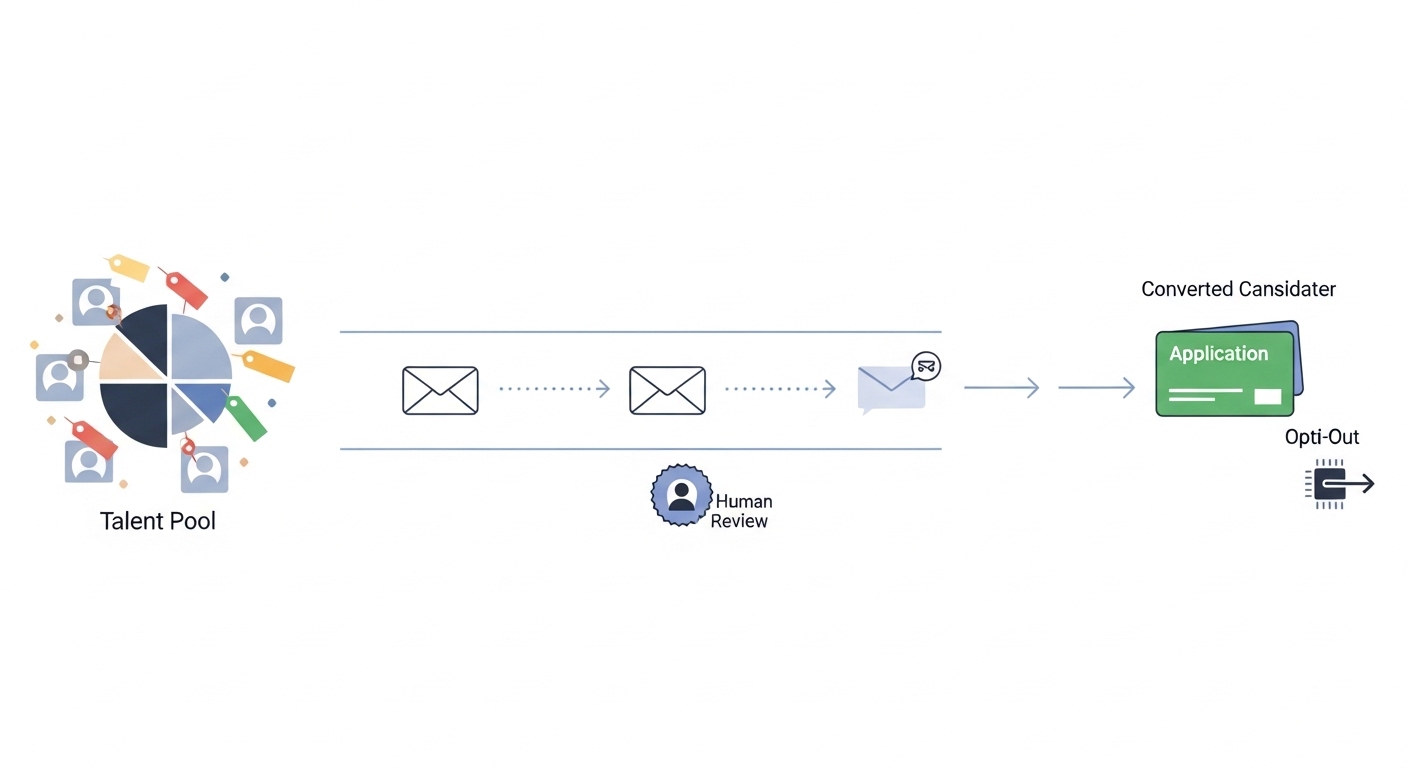
Candidate nurturing is a structured series of messages sent to prospective candidates over time. The goal is to keep your employer brand visible and build enough trust that when a role opens, the candidate is already warm. Think of it as a content drip campaign for talent: relevant, timed, and personalised enough to feel like it came from a person, not a bulk sender.
In practice
- A sourcer adds a mid-career software engineer to a future-consideration sequence after they decline a role. Three months later, that candidate opens the fourth email and replies asking about a new opening.
- A TA team at a 300-person scale-up uses Make to send a bi-weekly engineering blog post to candidates who passed a phone screen but accepted a competing offer. Open rates stay around 28 percent.
- A recruiter says "we put them in the drip" as shorthand for moving a candidate from active pipeline to a nurture track when the req closes but the person is worth keeping warm.
Quick read, then how hiring teams use it
This is for recruiters, sourcers, TA, and HR partners who need the same vocabulary in debriefs, vendor calls, and policy reviews. Skim the first section when you need a fast shared picture. Use the second when you are deciding how it shows up in the ATS, sourcing tools, or candidate communications.
Plain-language summary
- What it means for you: Keeping good candidates warm between active conversations so you have a shorter list of warm leads when the next req opens, instead of starting cold every time.
- How you would use it: Pick a role family. Pull people from your ATS who reached at least a phone screen in the last 18 months. Set up a 3-step email sequence with genuine content: a team blog post, an event invite, a direct update about the company. Review replies weekly.
- How to get started: Start with one job family and one sequence of three emails spaced three weeks apart. Measure open rate and reply rate before expanding to other segments.
- When it is a good time: When you have evergreen or frequently recurring roles and a talent pool of at least 50 to 100 people who have expressed some prior interest.
When you are running live reqs and tools
- What it means for you: A nurture sequence is an automated touchpoint engine that keeps candidates engaged between active searches, reducing cold-start time on recurring roles.
- When it is a good time: After your ATS has a minimum viable talent pool segmented by job family, your GDPR documentation covers the lawful basis for drip messaging, and at least one recruiter owns the reply inbox.
- How to use it: Wire a CRM or email tool (Lemlist, Mailchimp, or a native ATS nurture feature) to your segmented candidate lists. Use AI to generate personalised first lines keyed to the candidate's last role or skill. Keep a human review gate on first sends to a new segment.
- How to get started: Export 50 to 100 candidates from one job family in your ATS. Build a 3-email sequence in your email tool. Monitor deliverability, reply rate, and unsubscribes for 30 days before scaling.
- What to watch for: Unsubscribe rates above 1 percent, open rates below 20 percent on a verified list, or replies that signal annoyance. Also watch for compliance drift: if GDPR lawful basis changes or candidates opt out and are not removed from future sends.
Where we talk about this
On AI with Michal live sessions the sourcing automation track covers nurture sequence design, GDPR documentation, and how to wire drip flows in Make or n8n. The AI in recruiting track shows how to use AI drafting tools to personalise sequence copy at scale while keeping a human send gate. Start at AI Sourcing Lab.
Around the web (opinions and rabbit holes)
Third-party creators move fast. Treat these as starting points, not endorsements, and double-check anything before you wire candidate data.
YouTube
- Search "candidate nurturing email sequence recruiting" on YouTube for practitioner walkthroughs of Lemlist and HubSpot flows set up for TA teams.
- Recruiting Brainfood streams occasionally cover long-game candidate relationship building with concrete drip examples from in-house TA teams.
- r/recruiting has threads on CRM and drip tools where practitioners share real open and reply rates from their sequences.
- r/RecruitmentAgencies covers the agency-side version (keeping candidates warm between placements) with honest discussion of what actually moves response rates.
Quora
- How do you nurture passive candidates in recruiting? collects practitioner answers on timing, content, and CRM choices.
Drip versus blast
| Approach | Timing | Personalisation | GDPR risk |
|---|---|---|---|
| Blast | One send | None | High without consent |
| Drip sequence | Spaced over weeks | Low to medium | Medium with LIA documented |
| Personalised drip | Spaced, triggered | High | Lower with clear opt-in |
Related on this site
- Glossary: candidate data enrichment, outbound talent sourcing, workflow automation
- Glossary: GDPR and first-touch candidate outreach, recruiting email automation, proprietary talent pool
- Glossary: sourcing funnel metrics, human-in-the-loop
- Live cohort: AI Recruiting Accelerator
- Membership: Become a member