Client exclusivity in agency agreements
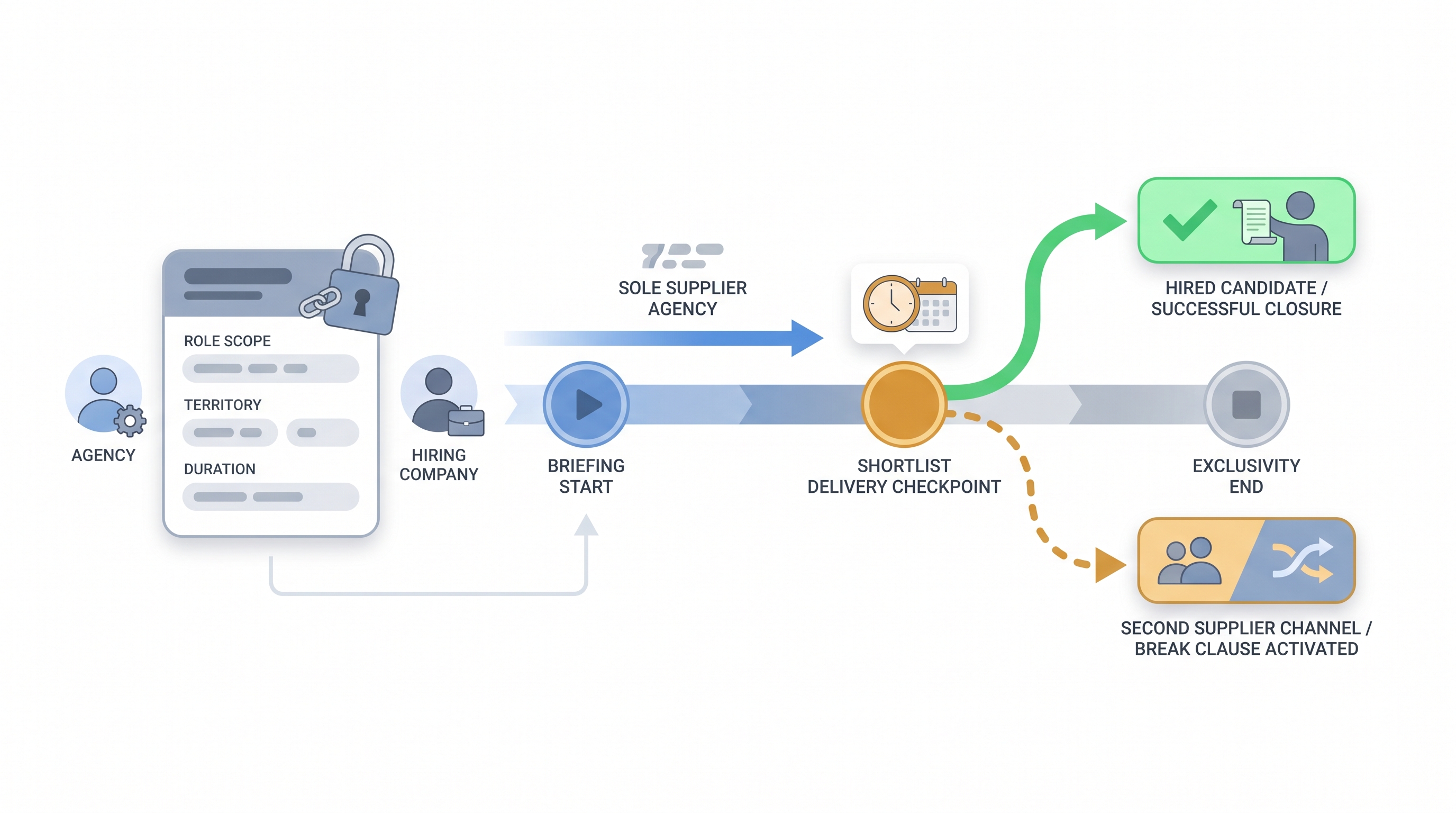
A client exclusivity clause in a recruiting agency agreement restricts the hiring company from briefing competing agencies on the same role or roles during a defined period, giving the engaged agency a protected sourcing window in exchange for deeper research investment and a stronger service commitment.
Michal Juhas · Last reviewed May 7, 2026
What is client exclusivity in an agency agreement?
Client exclusivity in a recruiting agreement is a contractual clause that restricts the hiring company from briefing competing agencies on the same role or set of roles during a defined period. The agency that holds exclusivity gets a protected window to source, qualify, and shortlist candidates without racing against rival submissions.
The clause matters because recruiting agency economics depend on conversion. A contingency brief sent to four agencies simultaneously splits the potential fee across four suppliers, and the first to submit a hired candidate wins. Exclusivity changes that structure: one agency, one shot, deeper investment in the search.
Exclusivity takes different forms depending on the engagement type. In retained executive search, it is nearly always present and tied to an upfront payment. In specialist contingency search, it may be time-limited to 30 days. In preferred supplier arrangements, a panel of approved agencies competes on speed but no single supplier holds exclusive rights.
In practice
- An executive search firm negotiating a CHRO placement asks for 60-day exclusivity tied to a shortlist-delivery milestone. The client agrees, and the agency invests two senior researcher weeks in market mapping. Without exclusivity, the firm would have run a lighter search and relied on its existing pipeline rather than building a fresh long list.
- A tech staffing agency places 15 to 20 developers per year with a scale-up client. The client signs a preferred supplier clause but not an exclusivity clause. When a senior DevOps role opens, the client splits the brief between the agency and an internal TA sourcer. The agency wins the placement but at the lower PSA rate, not the full contingency fee.
- A mid-market agency includes an exclusivity clause with a 45-day window and a milestone: first shortlist delivered within 10 working days. The client breaches by briefing a competitor at week three. The agency sends a formal notice citing the clause and the client pays a kill fee rather than litigate.
Quick read, then how hiring teams use it
This page is for agency principals, in-house TA leaders, and operations managers who negotiate or review recruiting agreements. Skim the first section for the definition. Use the second when you are reviewing contract terms, setting expectations at a brief, or deciding whether to grant or request exclusivity on a specific role.
Plain-language summary
- What it means for you: Exclusivity gives one agency a protected window to fill your role without competition from rival suppliers. In exchange, the agency commits deeper resources to the search than it would on a wide-open contingency brief.
- How you would use it: Agree in writing: which role or roles, what geography, how long, and what milestone (first shortlist, specific date) triggers a right to open the brief to others if the agency underdelivers.
- How to get started: On your next senior or niche brief, ask the agency to propose exclusivity terms before signing. Compare the service commitment (research depth, turnaround, dedicated researcher) against what you get on a multi-agency brief. Decide based on role difficulty, not habit.
- When it is a good time: When the role is genuinely hard to fill and you want one agency investing heavily rather than four agencies racing to submit the first CV. Also when you are retaining the agency for a milestone search and the fee structure requires mutual commitment.
When you are running live reqs and tools
- What it means for you: Exclusivity affects how your ATS and CRM should track submissions. During an exclusivity window, any candidate the exclusive agency presents should be flagged as under that agreement. Briefing a competing supplier in the same period creates a contractual exposure that can cost the company a kill fee or disputed placement fee.
- When it is a good time: At the briefing call, before any agency begins sourcing. Setting exclusivity terms at that point is straightforward. Trying to add it after multiple agencies have already started creates a dispute about who owns candidates already in the pipeline.
- How to use it: Document the exclusivity start and end date in your ATS or req notes. Set a reminder at the midpoint to review progress. If the agency is not delivering, check the contract for milestone-based break clauses before briefing a second supplier. See backfill periods and replacement guarantees for how guarantee and performance clauses interact with exclusivity terms.
- How to get started: Audit your last five senior placements through agencies. How many ran multi-agency? Did first shortlist quality differ when the agency knew they had exclusivity? Use that internal data to set your default approach for the next brief.
- What to watch for: Vague exclusivity language such as "sole agency basis" with no time limit or milestone condition. These clauses can trap a client with a slow supplier and expose an agency to disputes when the client moves on without a formal notice process. Both sides should insist on a written scope that defines duration, covered roles, delivery milestones, and the consequences of breach.
Where we talk about this
On AI with Michal live sessions, agency agreement terms including exclusivity, retainers, and preferred supplier clauses come up in the AI in recruiting track when agency founders and TA leaders discuss how to structure the business side of their searches. The Sourcing Lab cohort covers the economics of agency and in-house recruiting side by side so both sides understand what they are committing to before signing.
Around the web (opinions and rabbit holes)
Third-party content on exclusivity in recruiting contracts spans legal commentary, agency owner forums, and TA practitioner communities. These are starting points, not endorsements. Verify any clause wording with employment counsel before including it in a live agreement.
YouTube
- Exclusive vs non-exclusive recruiting agreements covers the trade-offs from both agency and client perspectives.
- Retained search vs contingency recruiting discusses how exclusivity fits into retained engagements and why agencies request it.
- How to negotiate a recruiting agency contract walks through common clauses including exclusivity windows, kill fees, and milestone triggers.
- Exclusivity clauses in recruiting agreements in r/recruiting covers recruiter and TA leader views on when exclusivity is reasonable and when it is overreach.
- Retained vs contingency search in r/RecruitmentAgencies includes agency owner accounts of how exclusivity changes search quality and fee recovery.
- Agency preferred supplier vs exclusive in r/humanresources surfaces HR leader perspectives on managing agency panels and when to grant sole-agency rights.
Quora
- What does an exclusive recruiting agency agreement mean? collects practitioner and legal commentary on what exclusivity means in practice for both sides.
Exclusivity structures compared
| Structure | Client obligation | Agency commitment | Typical duration |
|---|---|---|---|
| Full exclusivity (retained) | No other agencies, upfront fee | Dedicated researcher, milestone shortlist | 60 to 90 days |
| Time-limited exclusivity (contingency) | No other agencies during window | Priority sourcing effort | 30 to 45 days |
| Preferred supplier panel | Route roles through panel only | Compete on speed and quality | Ongoing |
| Open contingency | No restriction | Best-effort, first-submit wins | Per req |
Related on this site
- Glossary: Agency escrow retainer, Agency indemnification clauses, Backfill periods and replacement guarantees
- Glossary: Candidate right to represent, Client concentration risk for recruitment agencies
- Glossary: Differentiating agency search from in-house TA, Business development for recruiting agencies
- Glossary: Agency recruiter utilization, Recruitment agency software
- Workshops: Sourcing Lab
- Course: Starting with AI: the foundations in recruiting
- Membership: Become a member