Panel debrief alignment
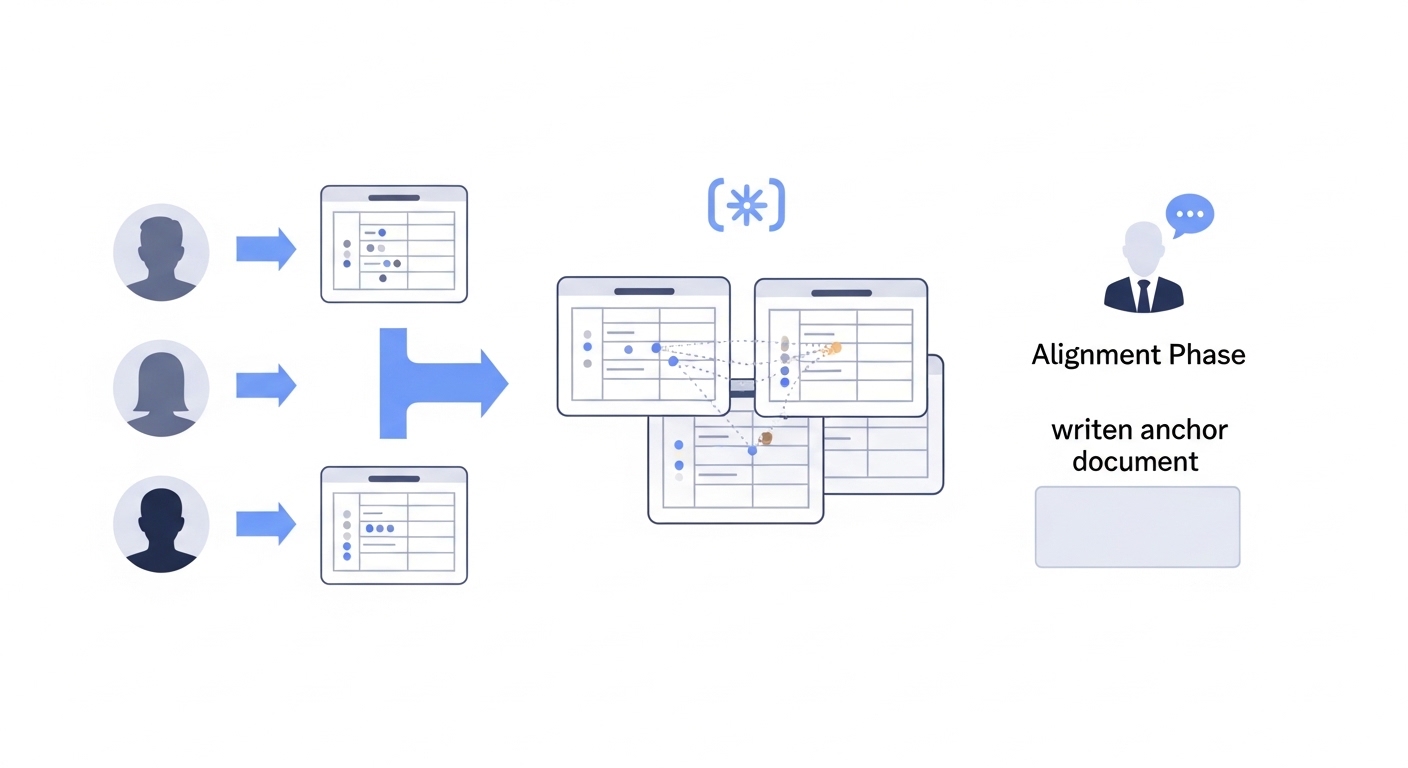
A structured process in which every interviewer submits an independent score and evidence before a group discussion, so early opinions do not anchor the rest of the panel.
Michal Juhas · Last reviewed June 8, 2026
What is panel debrief alignment?
Panel debrief alignment is the practice of collecting every interviewer's independent score and written evidence before the group discussion opens. The goal is to prevent one strong opinion from anchoring the rest of the panel before everyone has committed their own assessment.
In practice
- A recruiter sends a scorecard link to three interviewers immediately after the last interview. Everyone completes it before the calendar invite for the debrief fires. The hiring manager does not see anyone else's score until all three have submitted.
- In sourcing automation cohorts, teams wire an ATS webhook that blocks the debrief calendar event from being accepted until the structured submission is complete.
- A TA leader might say "we had a split debrief" when scores were spread across the rubric, implying the decision required explicit facilitation rather than a quick consensus.
Quick read, then how hiring teams use it
This is for recruiters, TA partners, and hiring managers who want decisions grounded in evidence, not whoever spoke first. Skim the first section for a shared picture. Use the second when you are designing or debugging your own debrief process.
Plain-language summary
- What it means for you: Everyone on the interview panel submits their score and evidence before the group talks. No one sees anyone else's take first.
- How you would use it: Build the submission step into your process as a hard gate: no debrief calendar invite is accepted until all scorecards are in.
- How to get started: Pick one open req, create a simple shared scorecard (a table in Notion or a native ATS field), and require three bullet points of evidence per competency before the next debrief.
- When it is a good time: Every structured hiring process. The investment is five to ten minutes per interviewer and it pays back every time a strong hire is saved from a groupthink veto or a weak hire is caught before an offer.
When you are running live reqs and tools
- What it means for you: Independent submissions create an audit trail that holds up under legal challenge, EEOC review, or internal diversity review. They also surface calibration gaps between interviewers faster than informal talk.
- When it is a good time: Any req with two or more interviewers. High-volume roles where you need statistical consistency across panels. Roles where past decisions have shown demographic skew.
- How to use it: Map each submission field to a competency in your scorecard. Set a hard deadline (often the end of the interviewer's working day). Use ATS automation or a webhook to block the group meeting until submissions are complete. Review the spread before facilitating: if all scores are identical, investigate whether interviewers co-discussed before submitting.
- How to get started: Run one debrief with written submissions before discussion and compare the outcome to the prior three informal debriefs. Track whether the final decision changed after discussion and document why.
- What to watch for: Scores that cluster suspiciously close after a panel that talked informally beforehand. Evidence bullets that describe personality or communication style in vague terms. AI summary tools that flatten nuance or import protected-characteristic language from transcripts into the debrief record.
Where we talk about this
On AI with Michal sessions, panel debrief alignment shows up in the AI in recruiting track when we discuss how structured data from interviews feeds downstream AI tools, and in the sourcing automation track when teams wire submission gates into their ATS. Start at AI Recruiting Accelerator and bring a copy of your current debrief format.
Around the web (opinions and rabbit holes)
Third-party creators move fast. Treat these as starting points, not endorsements.
YouTube
- Search "structured interview debrief" on YouTube for practitioner walkthroughs; the SHRM and AIRS channels publish relevant interviewer training content that covers independent scoring methods.
- Laszlo Bock's talks on structured hiring at Google (widely clipped on YouTube) remain the clearest public case for evidence-first debrief processes.
- r/recruiting threads on "debrief best practices" surface real recruiter frustration with consensus pressure and quick-hire panic.
- r/humanresources has honest threads on how companies handle split debrief outcomes when the hiring manager and recruiter disagree.
Quora
- How do you prevent groupthink in hiring decisions? gathers practitioner perspectives on structured debrief and blind scoring worth reading alongside the research.
Independent scores versus group consensus
| Method | Bias risk | Audit trail | Time cost |
|---|---|---|---|
| Verbal free-for-all | High (anchoring) | None | Low |
| Independent submission then debrief | Lower | Strong | Medium |
| Blind scoring only | Lowest | Strong | Medium |
Related on this site
- Glossary: Scorecard, Calibration session, Adverse impact, AI bias audit, Behavioral interview
- Blog: Boolean search vs AI sourcing
- Guides: Sourcers
- Live cohort: AI Sourcing Lab
- Membership: Become a member