Reference check automation
Software that triggers, sends, collects, and scores reference questionnaires automatically, so recruiters receive structured feedback without chasing each referee individually by email or phone.
Michal Juhas · Last reviewed June 13, 2026
What is reference check automation?
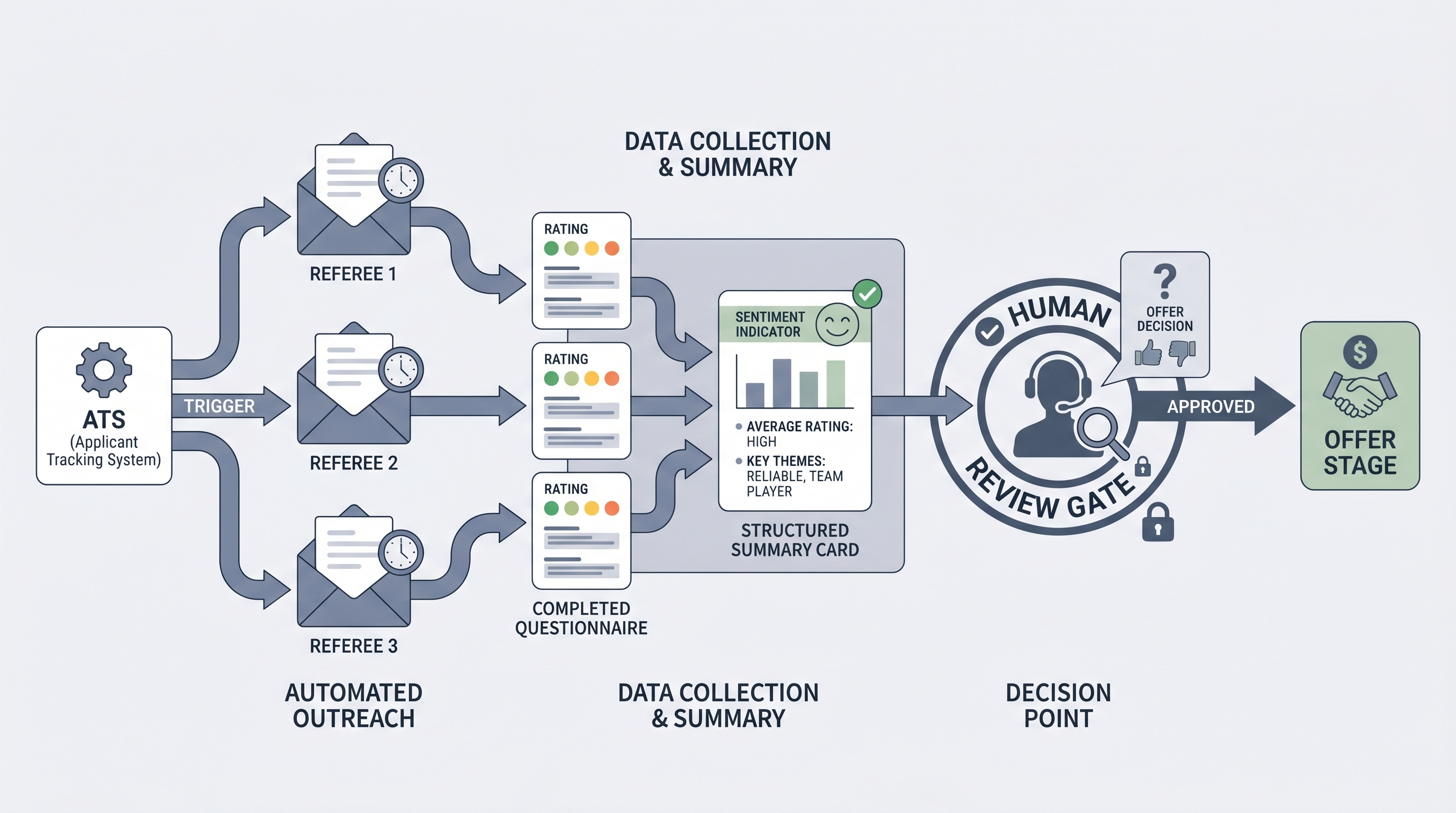
Reference check automation replaces the cycle of recruiter-chasing-referees with a platform that sends structured questionnaires, collects responses, and surfaces findings in a standard format. The recruiter initiates the check from the ATS; the platform handles deadlines, reminders, and collation.
In practice
- A recruiter closes a final-stage candidate and triggers the reference check from the ATS. The platform emails three referees with a link and a 48-hour deadline. All three complete it by the next morning without a single follow-up call.
- A TA ops team connects the reference platform to their ATS so reference completion status appears as a stage gate. Offers do not generate until the reference report is in the candidate record.
- A hiring manager might ask "did the references come back clean?" meaning they want to know if the sentiment scores and comments matched the candidate's interview performance, not just that responses were received.
Quick read, then how hiring teams use it
This is for recruiters, TA ops specialists, and hiring managers who want reference data without the logistics overhead. Skim the first section for the shared picture. Use the second when evaluating or deploying a reference automation tool.
Plain-language summary
- What it means for you: The platform does the chasing. You trigger the request, referees get a link, and you get structured feedback in your inbox rather than playing phone tag for a week.
- How you would use it: Trigger from your ATS at the final stage, set a 48-hour deadline for referees, and review the full report before any offer is confirmed.
- How to get started: Audit your current reference process for average completion time and data quality. Pilot one tool with one hiring team for a month and compare turnaround time and referee response rates.
- When it is a good time: Volume hiring where phone calls are not feasible at scale. Any process where reference data currently arrives after the offer is out.
When you are running live reqs and tools
- What it means for you: Automated references feed structured data into your ATS that you can analyse across hires, not just per-candidate. Completion rates, score distributions, and common risk flags become measurable.
- When it is a good time: After your interview scorecard process is stable and you know what reference data you actually use in decisions. Do not automate a reference process you do not currently use.
- How to use it: Connect the platform to your ATS via API so reference status updates without manual entry. Build the questionnaire around the same competencies as your interview scorecard. Have a data processing agreement with the vendor and a retention policy before you store the first response.
- How to get started: Map your current reference process end-to-end. Count how many days pass between candidate confirmation and reference receipt. Set that as the baseline to beat.
- What to watch for: AI summaries that flatten nuanced referee answers. Questionnaires that inadvertently invite protected-characteristic commentary. Referee completion rates that drop on mobile because the form is too long.
Where we talk about this
On AI with Michal sessions, reference check automation comes up in the sourcing automation and AI in recruiting tracks when discussing how workflow automation connects hiring stages and what data flows should trigger automatically versus require human initiation. See AI Sourcing Lab for the next live session.
Around the web (opinions and rabbit holes)
Third-party creators move fast. Treat these as starting points, not endorsements.
YouTube
- Search "automated reference check" for platform walkthroughs; vendors publish explainer content but look for practitioner reviews alongside them to get a balanced picture.
- HR Tech World conference recordings include practitioner panel discussions on reference automation trade-offs worth finding on YouTube.
- r/recruiting threads on reference checks include practitioner debates on whether automation produces better or worse data than phone conversations.
- r/humanresources has honest threads on compliance risks of automated reference platforms in different jurisdictions.
Quora
- How do companies automate reference checks? collects practitioner perspectives on which tools work and what breaks.
Manual versus automated reference checks
| Factor | Manual (phone) | Automated (platform) |
|---|---|---|
| Turnaround time | 3 to 7 days | 24 to 48 hours |
| Data consistency | Variable | Structured |
| Nuance captured | High | Lower |
| Compliance logging | Manual | Automated |
Related on this site
- Glossary: Workflow automation, Scorecard, Human-in-the-loop, Candidate data enrichment, Background screening integration
- Blog: AI sourcing tools for recruiters
- Guides: Sourcers
- Live cohort: AI Recruiting Accelerator
- Membership: Become a member