Requisition intake
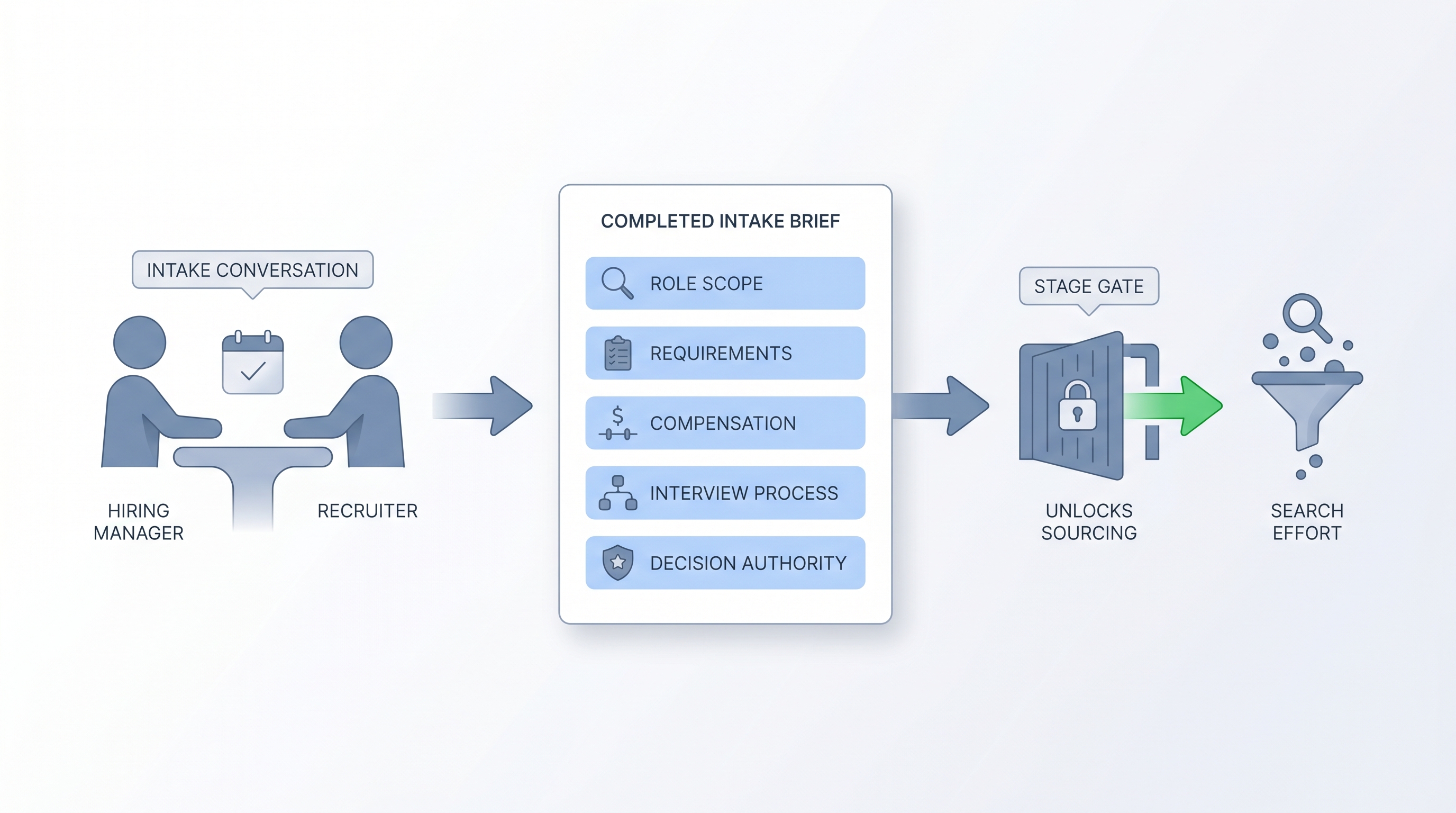
A structured conversation or form where the recruiter collects the information needed to run a search: role scope, success criteria, compensation range, interview process, and hiring manager availability, before sourcing begins.
Michal Juhas · Last reviewed June 13, 2026
What is requisition intake?
Requisition intake is the structured work a recruiter does before sourcing starts: understanding the role, agreeing on requirements, aligning on the interview process, and clarifying what success looks like for this hire. Done well it is a 30 to 45 minute investment that prevents weeks of misalignment downstream.
In practice
- A recruiter schedules a 30-minute intake call before posting any role. They use a standard template covering scope, success criteria, compensation, and interview process, then share the completed intake document with the hiring manager to confirm.
- A TA ops team builds the intake form directly into the ATS so that a req cannot advance to active sourcing until mandatory fields (budget approval, interview team, compensation range) are complete.
- A hiring manager who says "we need to loop in the team lead before we lock the scope" is signalling that the hiring authority is unclear, which would have caused a stall at the offer stage if not caught in intake.
Quick read, then how hiring teams use it
This is for recruiters, TA partners, and TA ops specialists who want to reduce mid-search scope changes and late-stage drop-off. Skim the first section for a shared definition. Use the second when building or auditing your intake process.
Plain-language summary
- What it means for you: Before you source a single profile, you sit with the hiring manager and agree on what you are looking for, how you will evaluate it, and who makes the final decision.
- How you would use it: Run a structured 30 to 45 minute intake meeting for every new req. Use a standard template. Confirm the agreed scope in writing.
- How to get started: Pull your last five hires that missed the original timeline by more than four weeks. Map the cause back to an intake failure: unclear requirements, unknown comp, undefined interview process, or missing stakeholder.
- When it is a good time: Always, before sourcing opens. The earlier the intake happens, the cheaper misalignments are to fix.
When you are running live reqs and tools
- What it means for you: A completed intake produces structured data (role scope, requirements, comp range, process) that can feed job description generation AI tools, sourcing briefs, and workflow automation triggers without manual re-entry.
- When it is a good time: When you are deploying AI drafting tools for JDs or sourcing briefs, a clean intake form is the highest-leverage input. Inaccurate intake data produces inaccurate AI-generated JDs.
- How to use it: Build intake fields into your ATS as a required stage gate. Connect to your JD template so approved intake fields pre-populate the draft. Use AI transcription tools on intake calls to create the intake brief, then have the hiring manager confirm before sourcing opens.
- How to get started: Audit your current intake form. Identify which fields are HR compliance fields versus recruiter decision fields. Separate them. Then ask: would a sourcer know what to look for after reading only the intake doc?
- What to watch for: Intake forms so long they become a substitute for the conversation. Hiring managers who answer 'flexible' for every field. Intakes completed after sourcing has already started, making them a documentation exercise rather than an alignment tool.
Where we talk about this
On AI with Michal sessions, req intake comes up in the AI in recruiting track when discussing how structured data from the front of the hiring process enables better AI tools at the sourcing and screening stages. See AI Sourcing Lab for the next live session.
Around the web (opinions and rabbit holes)
Third-party creators move fast. Treat these as starting points, not endorsements.
YouTube
- Search "recruiter intake meeting" on YouTube for practitioner templates and walkthroughs; the SHRM and ATD channels publish relevant content on intake process design.
- Greg Savage's recorded talks on recruiter process discipline (searchable on YouTube) remain among the clearest practitioner arguments for intake rigour.
- r/recruiting threads on "intake meetings" include honest recruiter complaints about hiring managers who skip intake calls and what happens next.
- r/humanresources has discussion on TA ops process design that covers intake as a stage gate.
Quora
- How should recruiters prepare for a job intake meeting? collects practitioner perspectives worth reading before you redesign your own template.
Weak versus strong intake
| Element | Weak intake | Strong intake |
|---|---|---|
| Requirements | Someone senior | Specific skills, non-negotiable vs flexible |
| Compensation | TBD | Approved range with approval chain clear |
| Interview process | TBD | Named interviewers, format, timeline |
| Success criteria | Cultural fit | Observable outcomes at 90 days |
Related on this site
- Glossary: Calibration session, Job description generation AI, Workflow automation, Scorecard, Headcount planning
- Guides: Sourcers
- Live cohort: AI Recruiting Accelerator
- Membership: Become a member