Silver medalist candidates
Qualified candidates who went through a hiring process, performed well, but were not selected, preserved in the talent pipeline as first-call targets when a similar role opens.
Michal Juhas · Last reviewed June 13, 2026
What are silver medalist candidates?
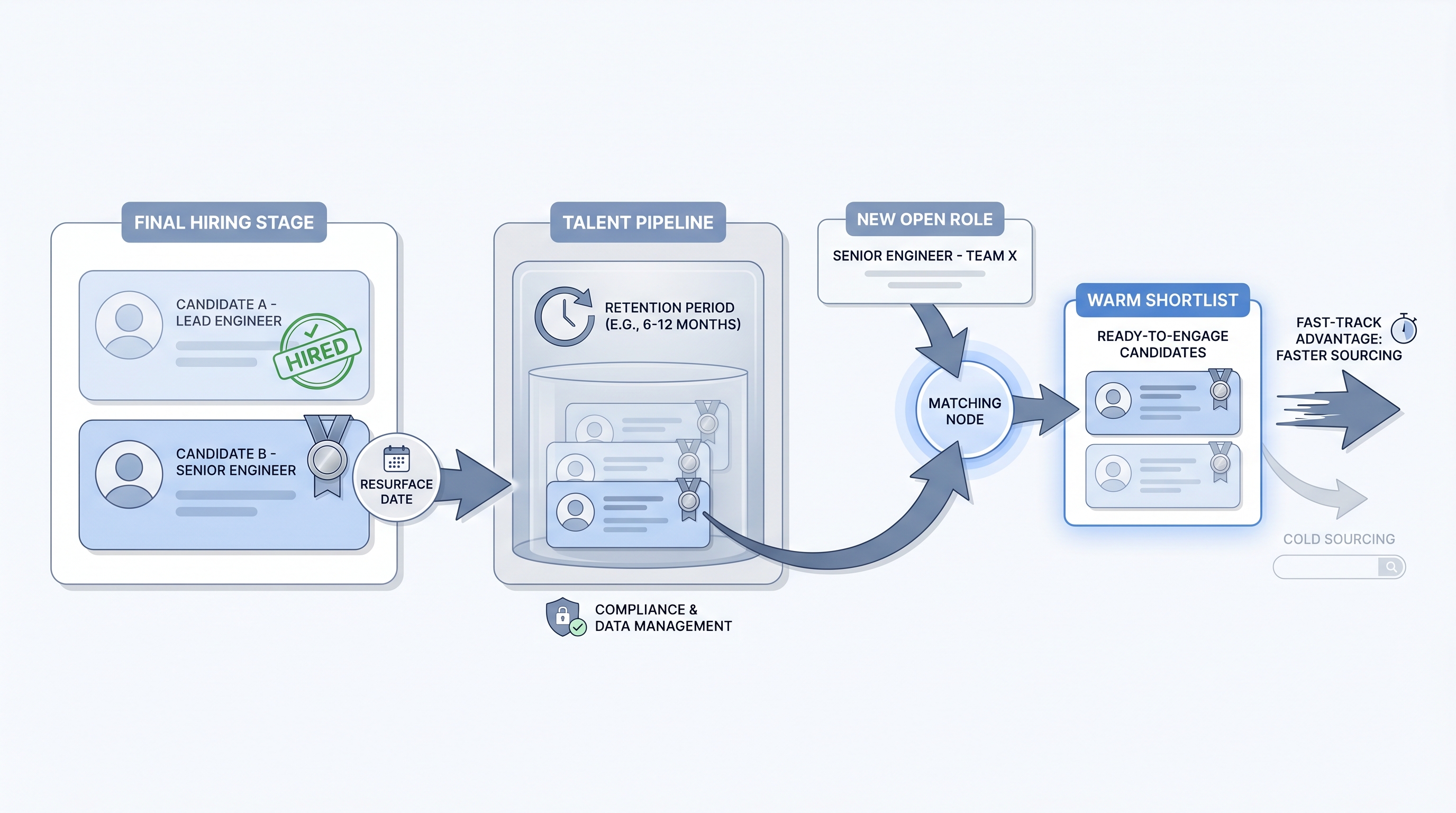
Silver medalists are candidates who performed well enough in a hiring process to reach the final stage but were not selected, usually because the role could only be filled by one person. They are preserved in the talent pipeline with enough context to be re-engaged quickly when a similar role opens, rather than starting the sourcing process from scratch.
In practice
- A recruiter closes a senior engineer role and instead of marking the runner-up as 'not selected', tags them as a silver medalist with a note on what stood out and a resurface reminder set for 90 days.
- A sourcing team opening a second headcount in the same engineering function starts by reviewing silver medalists from the last three similar searches before building any outreach campaign.
- A TA leader who says "check the bench" before authorising a sourcing budget for a new req means they want silver medalists and pipeline candidates reviewed before external sourcing spend is committed.
Quick read, then how hiring teams use it
This is for recruiters, sourcers, and TA leaders who want to convert past investment in candidate evaluation into faster future hires. Skim the first section for the shared definition. Use the second when designing your pipeline tagging and retention process.
Plain-language summary
- What it means for you: Candidates you already evaluated and found qualified, just not selected this time. They are the most efficient source for the next similar opening.
- How you would use it: Tag at the close stage of every req. Set a resurface date. When a similar role opens, check the silver medalist list before sourcing externally.
- How to get started: Audit your last 20 closed requisitions. Count how many runner-up candidates were tagged for future outreach versus lost to a generic 'not selected' status. That gap is your pipeline leakage.
- When it is a good time: Every hiring process that ends with a genuine runner-up should produce a silver medalist tag. If you only hire one person, you almost always evaluated more than one good candidate.
When you are running live reqs and tools
- What it means for you: Silver medalist data feeds candidate rediscovery tools and AI matching when new reqs open. The value is proportional to how structured your original evaluation data is.
- When it is a good time: When a new req opens in a function you have hired for before. Before any sourcing budget is committed. Before contacting a sourcing agency for a role type you have recently run.
- How to use it: Build the silver medalist tag into your ATS decline workflow as a prompted choice, not an optional field. Connect the tag to your proprietary talent pool strategy. Set data retention reminders aligned to your GDPR policy. Use AI matching tools to resurface candidates when a new req opens.
- How to get started: Create a saved search or report in your ATS for silver medalist candidates by role type and tag date. Run it at the start of every new req intake before sourcing opens.
- What to watch for: Silver medalist data that ages out because no retention policy was set. Re-engagement outreach so generic the candidate does not realise they are being contacted specifically. AI matching that resurfaces candidates whose interview notes are too thin to qualify the match accurately.
Where we talk about this
On AI with Michal sessions, silver medalist strategy comes up in the AI in recruiting and sourcing automation tracks when discussing how workflow automation can resurface pipeline talent and how candidate rediscovery tools work with existing ATS data. See AI Sourcing Lab for the next live session.
Around the web (opinions and rabbit holes)
Third-party creators move fast. Treat these as starting points, not endorsements.
YouTube
- Search "silver medalist recruiting" on YouTube for practitioner walkthroughs; SmartRecruiters and Greenhouse publish content on pipeline talent strategies that covers silver medalist use cases.
- The SourceCon archive includes talks on re-engagement strategy and talent pipeline management worth reviewing before building your own process.
- r/recruiting includes practitioner threads on how to handle runner-up candidates and whether re-engaging them is worth the effort.
- r/humanresources has discussion on GDPR obligations for candidate data held in talent pools.
Quora
- What happens to second-choice candidates after a hire? collects practitioner perspectives on silver medalist strategy worth reading before you build your own process.
Silver medalist versus cold sourcing
| Dimension | Silver medalist | Cold outreach |
|---|---|---|
| Time to first screen | Days | 1 to 3 weeks |
| Evaluation evidence | Existing | None |
| Candidate familiarity with role | High | Zero |
| GDPR compliance needed | Yes (retention) | Yes (first contact) |
Related on this site
- Glossary: Candidate rediscovery, Proprietary talent pool, Workflow automation, GDPR recruiting data, Scorecard
- Blog: AI sourcing tools for recruiters
- Guides: Sourcers
- Live cohort: AI Recruiting Accelerator
- Membership: Become a member