Candidate rediscovery
Surfacing silver-medalist or previously declined candidates from an existing ATS or CRM when a new role matches their profile, turning sunk sourcing cost into present pipeline.
Michal Juhas · Last reviewed May 29, 2026
What is candidate rediscovery?
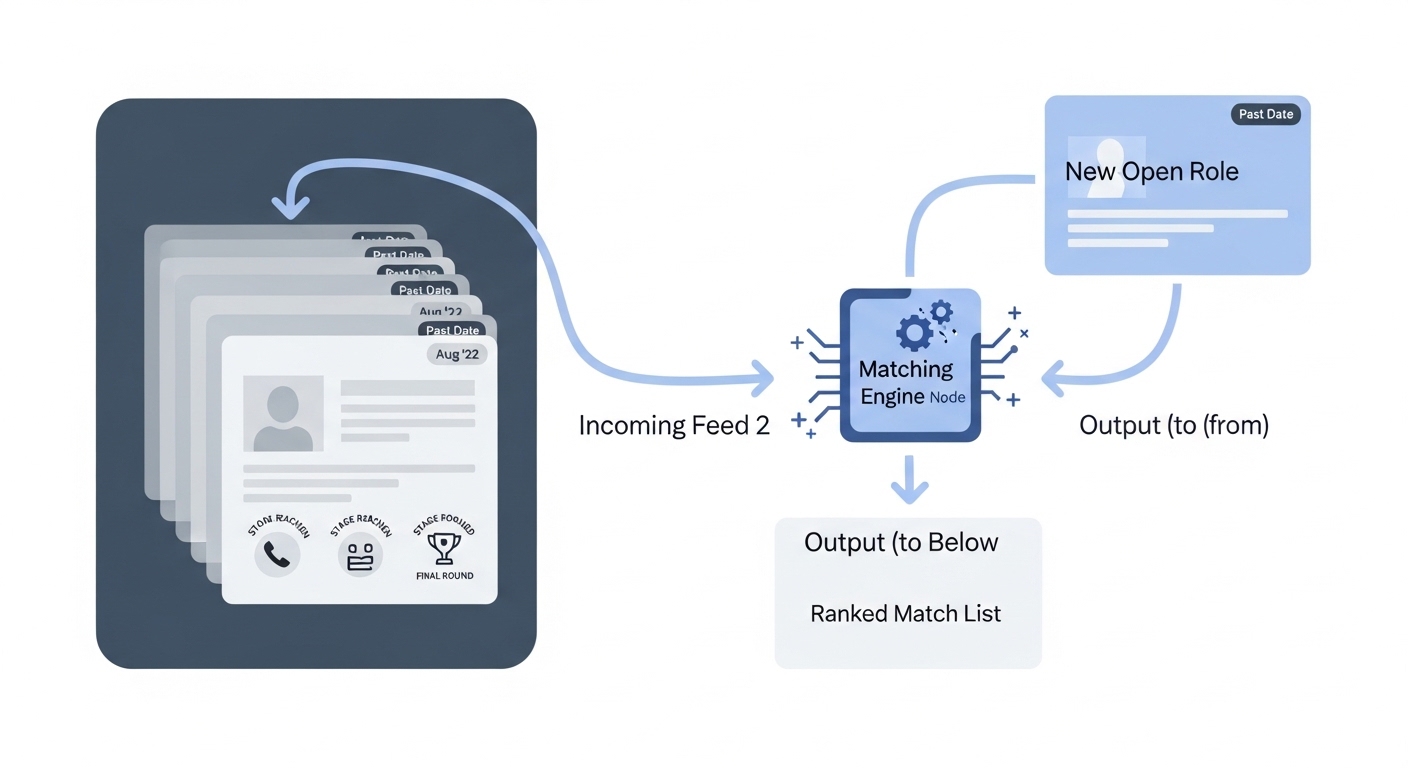
Candidate rediscovery is the practice of searching an existing ATS or CRM for candidates who were previously screened, reached a late stage, or were declined for reasons that may no longer apply, and reactivating the best matches for a current open role instead of starting sourcing from scratch.
Most recruiting teams have spent thousands of hours and significant budget building a candidate database. Rediscovery treats that database as the first sourcing channel rather than the last resort. A silver medalist who was not hired because headcount was frozen six months ago may be an ideal first call when the req reopens.
In practice
- A recruiter reopens a hard-to-fill data engineering role, runs a semantic search against the ATS for past candidates, and surfaces three final-round candidates from the previous year, cutting the sourcing phase by two weeks.
- A sourcer flags that a past candidate declined the offer because compensation was below market; the band has since moved, so they make contact again before running any external search.
- A TA leader audits disposition codes after a failed rediscovery run and discovers that 40 percent of historical declines have no sub-reason recorded, making the database nearly unsearchable for future reqs.
Quick read, then how hiring teams use it
This is for recruiters, sourcers, and TA operations teams who manage existing ATS databases and want to reduce time-to-first-screen on repeat or similar roles. Skim the first section when you need a shared definition. Use the second when you are deciding how to build a rediscovery step into your sourcing workflow.
Plain-language summary
- What it means for you: Before posting a new role or running external sourcing, someone checks the ATS for candidates who already know the company and previously made it through early screening.
- How you would use it: Search for past candidates by skill, role level, and last stage reached. Review the top results, check why each was not hired, and identify who is worth contacting again.
- How to get started: Pick one recently reopened role. Pull the last 12 months of candidates in ATS who reached a phone screen or beyond. Check disposition codes. Contact the two or three with the most relevant profiles before running external search.
- When it is a good time: Every time a role reopens, and any time a req has been open for more than three weeks without strong pipeline from external channels.
When you are running live reqs and tools
- What it means for you: Rediscovery reduces average time-to-fill and lowers cost-per-hire on roles the team fills repeatedly, because warm candidates move faster than cold prospects.
- When it is a good time: Before opening any external sourcing campaign on a role type the team has hired before, and after any hiring freeze ends on roles with past pipeline.
- How to use it: Pair ATS search with semantic search or embeddings to surface profile-level matches, not just keyword matches. Use a model to summarize past notes into a one-paragraph candidate brief for faster triage. Confirm GDPR lawful basis before contact.
- How to get started: Set up a standard rediscovery query per role family. Document the disposition sub-reasons your team will use going forward so the next search is cleaner. Log which rediscovery contacts converted to hire so you can measure ROI.
- What to watch for: Data quality is the main failure mode. Stale profiles, missing disposition codes, and outdated contact details all degrade rediscovery yield. Fix the database hygiene problem before buying a dedicated rediscovery tool.
Where we talk about this
On AI with Michal live sessions, candidate rediscovery comes up in sourcing automation blocks where we build ATS query workflows alongside semantic search setups. The goal is to make past pipeline the first sourcing step, not an afterthought. If you want the full workflow conversation, start at Recruiting OS and bring your ATS and data quality questions.
Around the web (opinions and rabbit holes)
Third-party creators move fast. Treat these as starting points, not endorsements, and double-check anything related to candidate data handling before applying it to your stack.
YouTube
- Search for "ATS database mining recruiting" or "silver medalist candidate strategy" on YouTube for practitioner walkthroughs on structuring past candidate searches and reactivation outreach.
- TA operations-focused channels occasionally cover CRM hygiene and rediscovery workflows with real examples of before-and-after pipeline metrics.
- r/recruiting threads on "reusing candidates" or "ATS search" reveal how much variation there is in how teams treat past pipeline and what data quality issues block rediscovery at scale.
- r/RecruitmentAgencies has threads on database mining strategy that are relevant for any team with a large legacy candidate pool.
Quora
- Searches for "how to find previous candidates in ATS" or "silver medalist recruiting strategy" surface practitioner approaches that range from manual spreadsheet reviews to dedicated AI-powered rediscovery tools.
Related on this site
- Glossary: Semantic search, Embeddings in recruiting, Candidate nurturing, GDPR recruiting data, Proprietary talent pool
- Blog: AI sourcing tools for recruiters
- Live cohort: Recruiting OS
- Membership: Become a member