ChatGPT for hiring
Using ChatGPT across the hiring lifecycle: turning intake conversations into structured role briefs, generating interview question banks, synthesising debrief notes into a hiring decision, and writing candidate communications, while keeping the actual hire/no-hire call with the human panel.
Michal Juhas · Last reviewed May 24, 2026
What is ChatGPT for hiring?
ChatGPT for hiring describes how a whole hiring team, not just one recruiter, uses ChatGPT across the lifecycle of a req: intake, calibration, interview prep, debriefs, and candidate communications.
The term sits next to ChatGPT for recruiters, which is the individual-task view (faster outreach, faster job descriptions). The hiring view is broader and harder. It involves the hiring manager, the recruiter, the interview panel, and the TA or ops lead, all generating artefacts that influence a hire/no-hire call. That changes the rules on review, logging, and consistency. The model can produce a debrief summary in 30 seconds; whether that summary is the version that drives a decision is a team question, not a recruiter question.
In practice
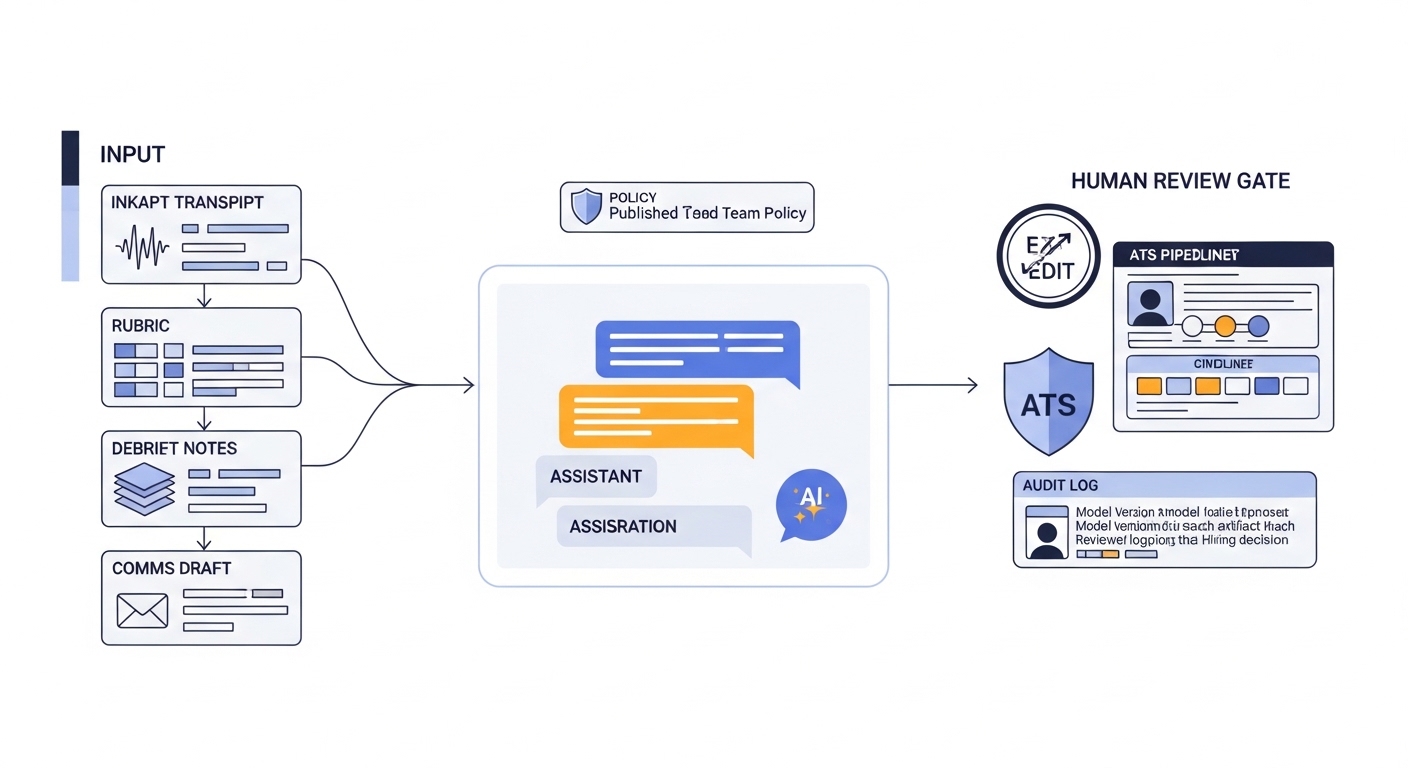
- A hiring manager records a 45-minute intake call, pastes the transcript into ChatGPT Enterprise with a company template, and gets a structured brief back: must-haves, nice-to-haves, target compensation band, and a draft scoring rubric. The recruiter edits and returns it for sign-off the same day.
- A panel runs four structured interviews, each scribe writes raw notes, and ChatGPT synthesises the four sets into a single debrief artefact tied to the rubric. The panel still meets to vote, but the discussion starts from a shared summary rather than four people reading their own notes.
- A TA leader says "we use ChatGPT for hiring artefacts only, and only on Enterprise," which is how the team explains the boundary to a new hiring manager: drafting is in scope, decision automation is out of scope.
Quick read, then how hiring teams use it
This is for hiring managers, TA leaders, ops, and recruiters who need a shared view of what ChatGPT does inside their hiring process. The first half covers the picture; the second covers the operating practice once you are running multiple reqs with multiple people.
Plain-language summary
- What it means for you: ChatGPT becomes a drafting layer across the hiring process rather than a personal productivity tool for one recruiter. It turns long conversations (intake, debriefs) into structured artefacts and writes the candidate-facing comms in your tone, while the panel still owns the decision.
- How you would use it: Identify the four moments where the model helps most: intake, interview prep, debrief, and comms. Pick one to start with (intake is the cheapest place to be wrong) and write a shared prompt template that every recruiter and hiring manager uses.
- How to get started: Move your team to ChatGPT Enterprise or Teams before any candidate data goes in. Publish a one-page policy saying which artefacts ChatGPT can draft and what review they need before they touch a decision. Pilot on one role and one panel before generalising.
- When it is a good time: When the hiring process is repeatable enough that a prompt makes sense (you run more than one of a given role per quarter). Not when every req is bespoke or when the panel is still figuring out what to assess.
When you are running live reqs and tools
- What it means for you: ChatGPT for hiring works as a shared drafting and synthesis layer that sits beside your ATS, not inside it. You paste signal in and copy artefacts out. Every artefact gets a named human reviewer before it influences a hire/no-hire call.
- When it is a good time: Once your team has settled on one or two intake and debrief templates, has a working scorecard standard, and has an Enterprise or Teams workspace approved by your data protection officer. Before any of those exist, ChatGPT for hiring is informal at best and risky at worst.
- How to use it: Set system instructions for each hiring use case (intake, rubric build, debrief synthesis, candidate comms). Paste only the minimum data required: the role title, transcript or notes, and the template. Log the model version, the prompt name, and the reviewer for every artefact that touches a decision. Cross-link the artefact to the ATS candidate record so the audit trail is reconstructible.
- How to get started: Build out one workflow first, usually intake. Run it on three hires before adding debrief synthesis. Publish a short internal policy that says which decision-shaping artefacts a hiring manager may produce with ChatGPT and what review is required. Use Sourcing Lab sessions to pressure-test prompts against other practitioner teams.
- What to watch for: Hallucinations on company facts, market data, or candidate background when the model is asked to research rather than synthesise. Bias risk when ChatGPT is used to score or rank candidates from free-text input. EU AI Act exposure if a hiring decision can be traced to an automated output without meaningful human review. Model drift when OpenAI ships an update and previously reliable prompts produce different output quality.
Where we talk about this
On AI with Michal live sessions, ChatGPT for hiring shows up later than ChatGPT for recruiters because it requires more team alignment. The AI in recruiting track covers the team-level patterns (intake, debriefs, governance), while the sourcing automation track moves toward stable AI-assisted workflows your team can run on every req. If you want the room conversation alongside other hiring leaders and TA practitioners, start at Sourcing Lab with one real artefact (an intake transcript, a debrief, or a rejection note) so the feedback is grounded in real output.
If your team is leaning specifically toward AI in sourcing, the AI Sourcing Lab is the build-along community where members share working prompt templates, debrief frames, and review checklists that have already been used on live reqs.
Around the web (opinions and rabbit holes)
Third-party creators move fast on this topic. Treat these as starting points, not endorsements, and double-check anything before you wire candidate data through a workflow you found in a tutorial.
YouTube
- ChatGPT for hiring managers for practitioner walkthroughs of intake and debrief prompt patterns aimed at the hiring manager rather than the recruiter
- ChatGPT hiring decision bias for compliance-focused discussions on bias, audit obligations, and EU AI Act exposure when ChatGPT outputs influence decisions
- ChatGPT Enterprise HR governance for the data protection and policy angle that HR and legal teams typically need before approving rollout
- r/humanresources: ChatGPT hiring surfaces real conversations on what works in hiring committees and where the model falls short on context
- r/recruiting: ChatGPT hiring covers the recruiter side of the hiring-team workflow, including pushback patterns from HMs and how to land prompt templates
- r/talentacquisition: AI governance for ops and TA leader views on policy, vendor risk, and what to require from a data protection officer before rollout
Quora
- How can ChatGPT be used in the hiring process? collects practitioner answers from hiring managers, sourcers, and TA leaders (read critically; quality varies and not every contributor has run a hiring loop)
ChatGPT for recruiters versus ChatGPT for hiring
| Dimension | ChatGPT for recruiters | ChatGPT for hiring |
|---|---|---|
| Primary user | Individual recruiter | Hiring team (HM, recruiter, panel, ops) |
| Main artefacts | Outreach, JDs, screening notes | Intake briefs, rubrics, debriefs, candidate comms |
| Decision exposure | Low (drafting tasks) | Medium to high (artefacts influence hire/no-hire) |
| Governance need | Light prompt hygiene | Written policy, named reviewers, audit trail |
| EU AI Act exposure | Mostly out of scope | Often in scope (high-risk hiring use cases) |
| Best tier | Teams or Enterprise | Enterprise (with DPO sign-off) |
Related on this site
- Glossary: ChatGPT for recruiters, ChatGPT for recruitment, AI in hiring, Human-in-the-loop, Hallucination, Scorecard, Structured interview, System instructions, AI bias audit, Adverse impact
- Lab: AI Sourcing Lab
- Live cohort: Sourcing Lab
- Course: Starting with AI: the foundations in recruiting
- Membership: Become a member