Recruiting operations (RecOps)
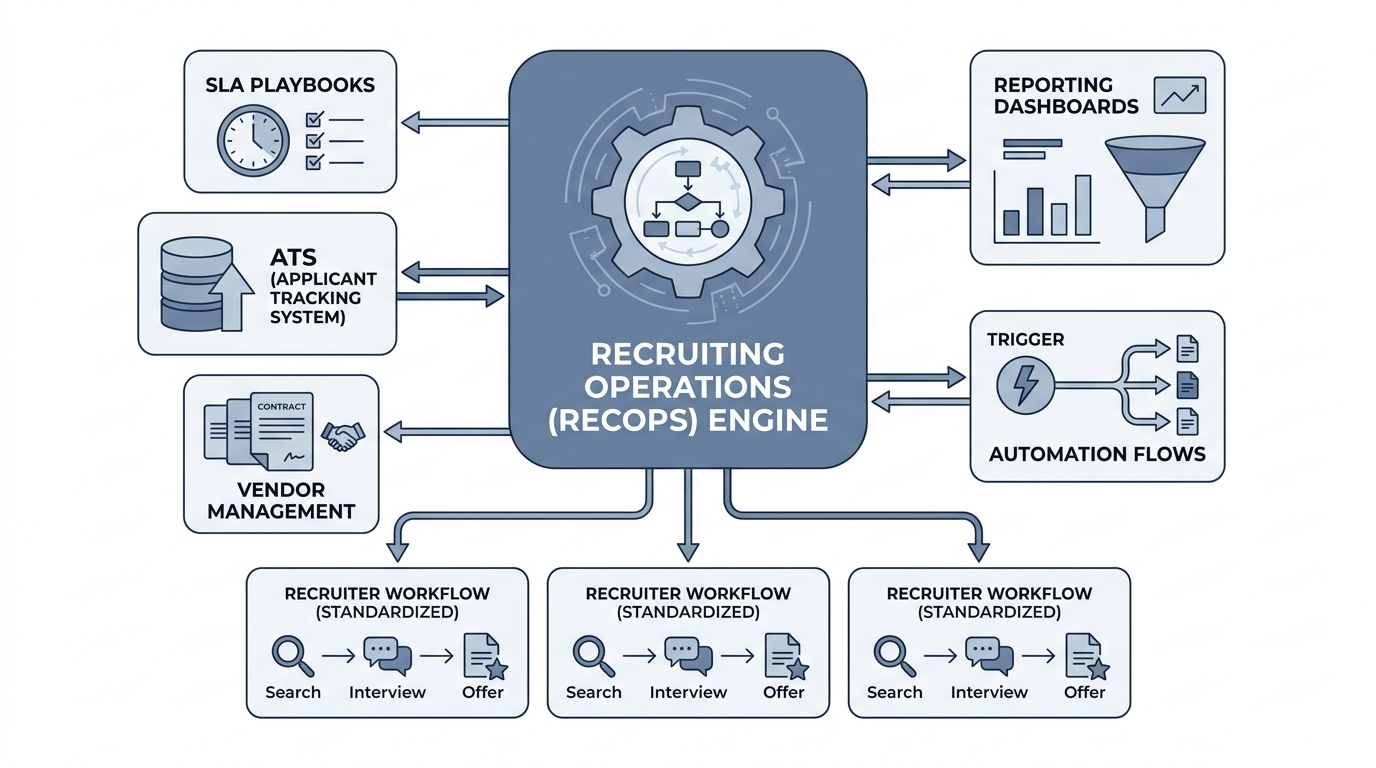
Recruiting operations (RecOps) is the function that builds the systems, data, process, and tooling behind hiring: ATS administration, reporting, automation, vendor management, and the SLAs that keep recruiters fast and consistent.
Michal Juhas · Last reviewed June 7, 2026
What is recruiting operations (RecOps)?
Recruiting operations, often shortened to RecOps, is the function that keeps hiring running smoothly behind the scenes. It owns the systems, data, process, and tooling that recruiters rely on every day: the applicant tracking system setup, the reporting, the automation, the vendor contracts, and the service-level agreements that keep handoffs fast and consistent. Think of it as the engine room of a hiring team. Recruiters talk to people; RecOps makes sure the rails they run on are clean, measurable, and not quietly falling apart.
In practice
- When a hiring manager asks "why is this role taking so long?" and someone pulls a clean stage-by-stage report in two minutes instead of a day of spreadsheet wrangling, that is RecOps working. Vendors and job ads call it "recruiting operations" or "TA operations."
- A RecOps person might say "the ATS field is required now" or "the SLA is three days in screening" in a process review. Recruiters feel it as fewer dropped balls, not as a technical word.
- When two recruiters run the same kind of req the same way because there is a documented playbook, that consistency is an operations decision, even if nobody calls it one out loud.
Quick read, then how hiring teams use it
This is for recruiters, sourcers, TA leaders, and HR partners who need a shared vocabulary in planning meetings, vendor calls, and reporting reviews. Skim the first section when you need a fast picture of what RecOps is. Use the second when you are deciding how it shows up in your ATS, your tooling, and your weekly numbers.
Plain-language summary
- What it means for you: RecOps is the behind-the-scenes work that makes every hire faster and more measurable: setting up the hiring software, keeping the data clean, building the reports, and writing down how things should be done so the whole team works the same way.
- How you would use it: You name the most painful repeat problem (messy data, slow reports, inconsistent process), you fix the system once, and every future req benefits, not just the one in front of you.
- How to get started: Pick the question your leadership asks most that nobody can answer quickly. Make that one report reliable. That is your first piece of RecOps.
- When it is a good time: When hiring volume grows, when reports take too long to assemble, or when recruiters keep doing the same job in different ways.
When you are running live reqs and tools
- What it means for you: RecOps changes the conditions every req runs under: ATS stages, required fields, SLA metrics, integrations, and the reports leadership trusts. It is how you scale a hiring team without chaos compounding.
- When it is a good time: Around fifteen to twenty recruiters, or whenever data hygiene and broken handoffs start costing more than the operations work would.
- How to use it: Anchor on a few real metrics (time-to-fill, stage conversion, time in stage), keep ATS data clean, and add workflow automation only after the manual process is boring and documented.
- How to get started: Document one high-friction loop end to end, fix it, then measure it through a requisition funnel report. Add AI drafting and automation once the data underneath is trusted.
- What to watch for: Vanity metrics, dashboards built on half-filled fields, API keys in shared screenshots, and AI output that reaches candidates without a human gate. Plan for failures the way you plan for the happy path.
Where we talk about this
On AI with Michal live sessions we treat RecOps as the foundation that makes AI in hiring safe to scale. The sourcing automation blocks spend time on triggers, API keys, and what happens when a vendor changes an endpoint, while the AI in recruiting blocks connect clean reporting and process back to hiring-manager trust and GDPR. If you want the full room conversation rather than only this page, start at the Sourcing Lab and bring your real ATS names, sample exports, and policy constraints.
Around the web (opinions and rabbit holes)
Third-party creators move fast and opinions vary. Treat these as starting points, not endorsements, and double-check anything before you wire it to candidate data.
YouTube
- What is Recruitment Operations? searches surface several practitioner explainers worth skimming for vocabulary before you build.
- Recruiting analytics and reporting walkthroughs help when you are deciding which metrics actually drive decisions.
- r/recruiting regularly has threads on ATS hygiene, reporting headaches, and "how do I prove my impact" that map directly to RecOps work.
- r/recruitinghell is the candidate-side view, useful for spotting where broken operations leak into a bad candidate experience.
Quora
- What is recruitment operations? collects a wide range of practitioner answers (quality varies, so read critically).
RecOps versus recruiting
| Question | Recruiter | Recruiting operations |
|---|---|---|
| Main goal | Fill this specific role | Make every future hire faster and measurable |
| Daily focus | Source, screen, schedule, close | ATS, data, reporting, process, tooling |
| Success looks like | Offer accepted | Clean data, trusted dashboards, consistent process |
Related on this site
- Glossary: Talent acquisition metrics, Time-to-fill, Recruiting stage SLA metrics, Workflow automation, Requisition funnel reporting
- Blog: AI sourcing tools for recruiters
- Tools: n8n for connecting your operations stack
- Guides: Sourcers
- Live cohort: Sourcing Lab
- Membership: Become a member